When Gen Z Works in HR
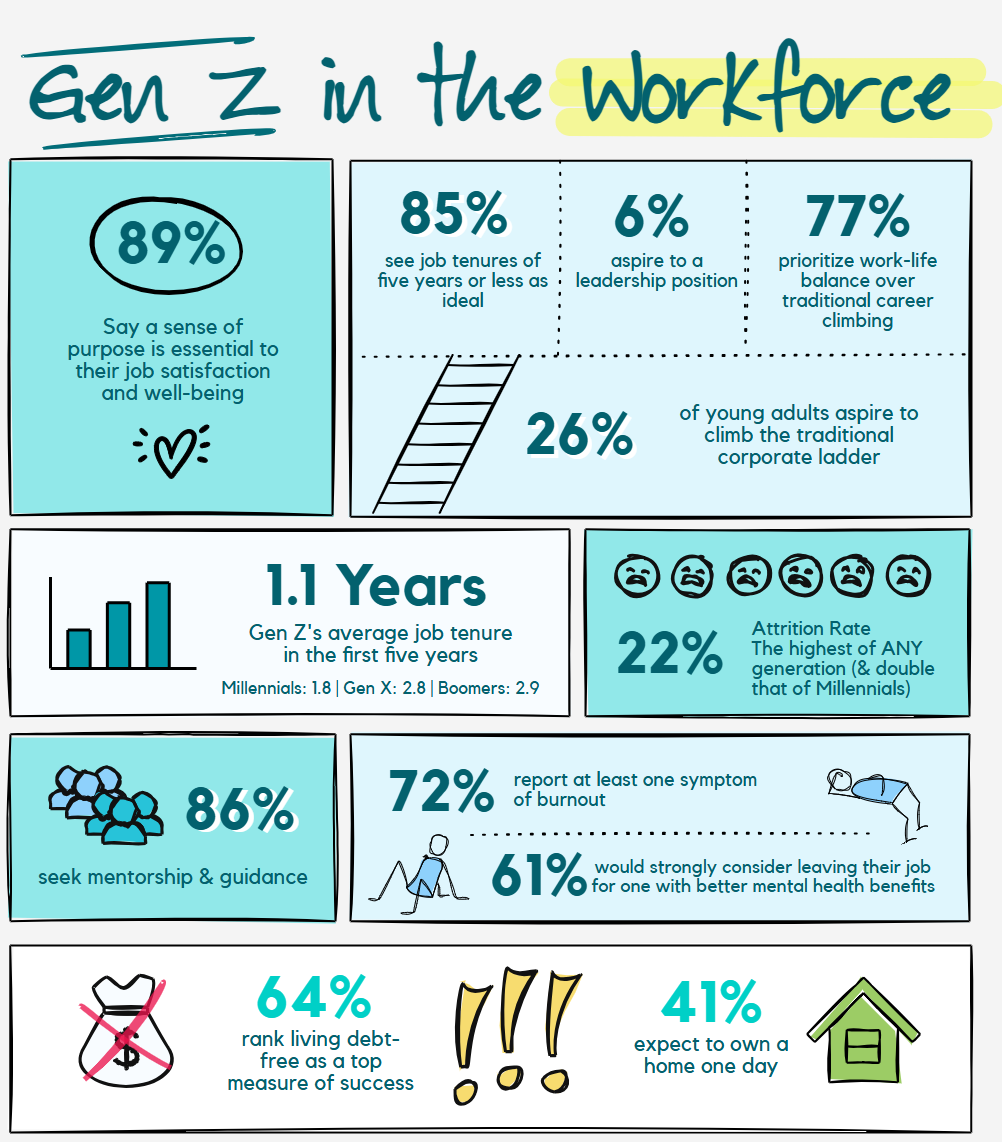
The data on Gen Z in the workforce is striking. 89% say a sense of purpose is essential to their job satisfaction. Their average job tenure in the first five years is 1.1 years, compared to 2.8 for Gen X and 2.9 for Boomers. Their attrition rate is 22%, the highest of any generation and double that of Millennials.
Those numbers usually get read as a retention problem. But there is another way to look at them.
Gen Z entered the workforce shaped by specific conditions: a pandemic, normalized mental health conversations, and instant access to information about salaries and company reputation. They came in expecting institutions to explain themselves. When the "why" is missing, they do not assume it exists somewhere above their pay grade. They fill the gap with skepticism.
That is not dysfunction. That is how they were formed.
What Happens When That Generation Practices HR
Most conversations about Gen Z at work are about how to manage or retain them. Far fewer ask what happens when Gen Z is the one holding organizational information, delivering difficult decisions, and absorbing what employees cannot say out loud.
Every generation brings different instincts to that work. Gen Z is bringing a near-intolerance for opacity.
Transparency as a Non-Negotiable
For Gen Z, transparency is not a management style. It is a baseline expectation of trustworthy institutions. When a policy exists without a clear rationale, they notice. When what a company says publicly does not match what happens internally, they notice that too. The absence of a "why" is itself a signal, and not a reassuring one.
This is not about being difficult. It is about being shaped by a world where information asymmetry is not a given.
The Emotional Labor Question
HR carries weight that is largely invisible. Holding difficult information. Delivering decisions that affect someone's livelihood. Watching a process fail a person in real time without the authority to stop it.
Gen Z practitioners are more willing to name that weight out loud. That willingness is an asset. It can also make the role feel harder when the culture around them still expects composure as the only acceptable response.
What This Means for Organizations
Organizations that say they value transparency and then make opaque decisions create a specific kind of friction for Gen Z HR professionals. That gap is where burnout grows and where attrition starts.
The GenShift® framework is built on the idea that generational differences are signals worth paying attention to. Gen Z's insistence on clarity and consistency in HR may be telling us something about what the function has always needed, and has not always had the permission to ask for.
Want more?
To hear Gen Z HR professionals talk about this firsthand, listen to the GenShift Podcast episode HR Through Gen Z Eyes. Lilly Rancatore and Lucia Martin of Insperity bring this conversation to life in ways that are honest, specific, and worth sitting with.
If your organization is navigating how to lead, retain, or work alongside Gen Z, this is exactly the work I do. Let's talk.