The Hidden Cost of Working in HR
Most organizations have a support structure for employees going through hard times. Very few have one for the HR professionals navigating those situations alongside them.
That gap is worth examining.
What the role actually asks
HR professionals are expected to deliver unwelcome news, enforce policies they may personally disagree with, hold confidences they can't explain, and absorb the frustration of employees who don't have the full picture. They do this repeatedly, often in the same day, and then they're expected to show up the next morning and do it again.
That's not a complaint. It's just an accurate description of the work. And when we name it accurately, it becomes easier to see what it costs.
The GenShift® framework calls this emotional labor — the invisible weight that certain roles carry that never shows up in a job description. In HR, that weight is significant. And it tends to stay invisible precisely because the people carrying it are trained to keep it that way.
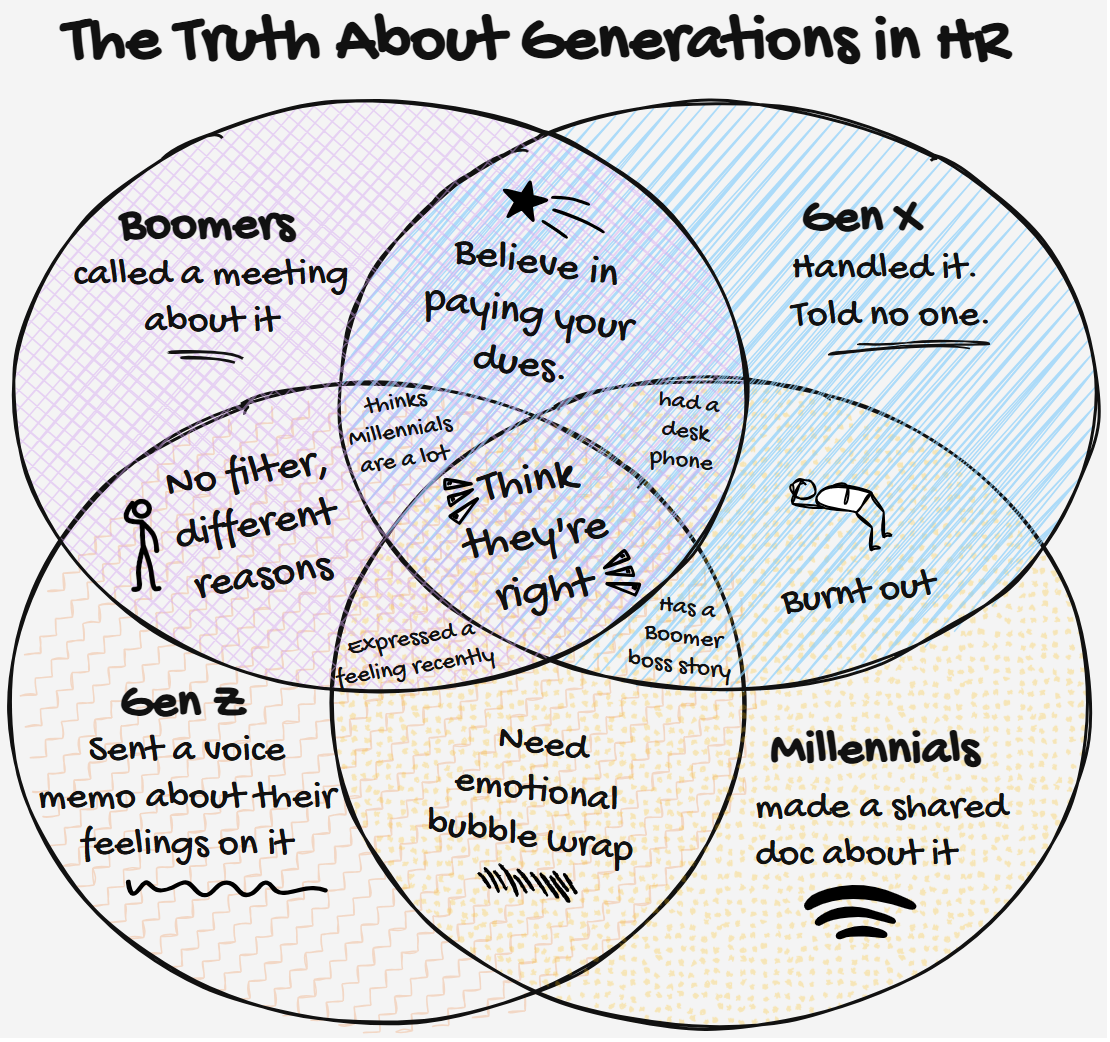
Why Gen X absorbs it quietly
Generation X, born between 1965 and 1980, is well represented in HR leadership right now. And their generational formation makes them particularly prone to carrying this labor without flagging it.
Gen X grew up during economic uncertainty and corporate instability. Many were latchkey kids who learned early that self-sufficiency was safer than dependence. They developed a strong instinct to handle things independently, not burden others, and manage difficulty without making it visible.
Those instincts are genuinely useful in HR. They produce professionals who stay calm under pressure, adapt quickly, and don't escalate unnecessarily. But they also produce professionals who absorb more than they should, for longer than is sustainable, without asking for support.
The result is often quiet burnout. Not the dramatic kind. The slow, cumulative kind that looks like competence from the outside.
What leaders can do
If you lead HR professionals, or if you lead an organization that relies on them, a few things are worth building intentionally.
Name the labor. Simply acknowledging that HR work carries emotional weight — in team conversations, in performance discussions, in how workload gets distributed — changes the culture around it. People don't need permission to struggle. They need permission to say so.
Build in decompression. Gen X in particular is unlikely to ask for this. They'll manage on their own until they can't. Structures that normalize recovery time — between difficult conversations, after restructuring announcements, during high-demand periods — serve everyone but especially the people least likely to advocate for themselves.
Don't mistake composure for capacity. Gen X HR professionals often look fine. That's partly skill and partly generational conditioning. It doesn't mean the load is manageable. Checking in directly, and meaning it, matters more than assuming everything is under control because nothing visible has broken down.
The broader point
Generational intelligence isn't just about understanding employees across age groups. It's about understanding the people doing the work of building and holding organizational culture — and recognizing that their generational formation shapes what they carry and what they hide.
When leaders develop that kind of awareness, HR professionals can do their best work. And that's better for everyone in the organization.