What Boomers Built in HR and Why It Still Matters
HR looks different depending on when you entered it: The labor market you graduated into. The leadership norms you were trained under. The expectations you carried into your first role. All of it shapes how you practice HR, what you push for, and where you draw the line.
That is why we are launching a new series on the GenShift® Podcast: HR Across Generations. Each episode centers one generation's experience inside the HR function. Same role. Different era. Different instincts. We are not grading HR or defending it. We want to understand how generational context shaped the work.
Let’s start with the Boomers.
They Had to Earn Their Way In
When Boomers entered HR, it was not called HR. It was personnel. The job was administrative. Get people hired, get them paid, do the exit interview when they leave. Strategic influence? That was not part of the deal.
Boomers who stayed in the function had to build something that did not exist yet: credibility. That took years of showing up, earning trust, learning the business from the inside, and proving the function could add real value. Nobody handed them a seat at the table. They earned it.
Trust Came From Showing Up
The Boomer approach to trust was simple but demanding. Get out of the office. Walk the factory floor. Ride along to field locations. Sit in town halls with frontline employees and hear what your policies actually look like in practice.
Sometimes that meant discovering a policy you designed in a boardroom made no sense on the ground. And having the humility to change it the next day.
This is what the GenShift framework calls leading with curiosity. When HR stops telling and starts listening, credibility follows. Boomers learned that through decades of practice.
Why This Matters Right Now
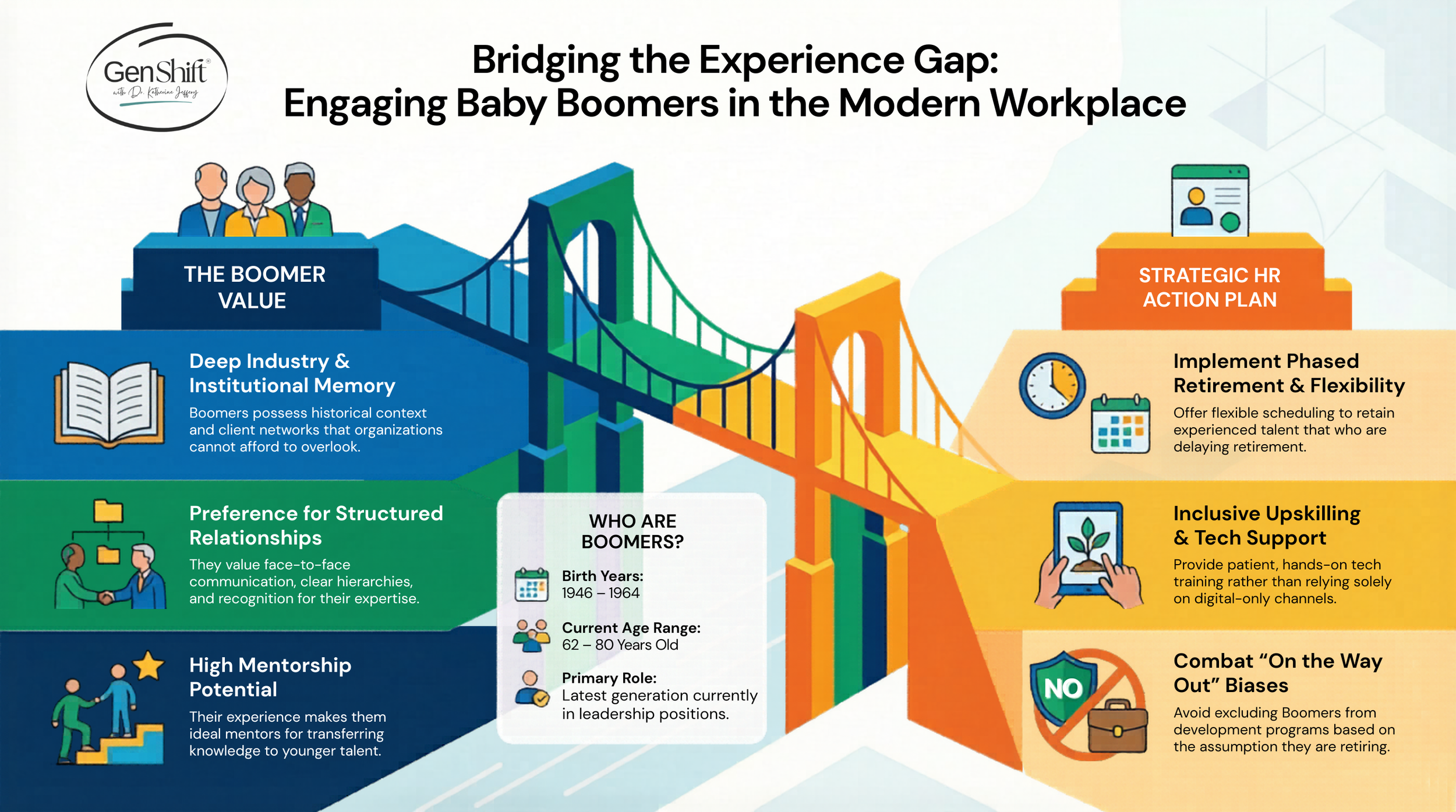
About one in four U.S. workers is a Baby Boomer, meaning roughly 25% of the workforce could retire in the next several years (Accurate Background) Between 2024 and 2030, more than 30 million Boomers will reach age 65. (Leo Wealth) More than 4 million Americans are turning 65 every year through 2027 (U.S. News & World Report)
That is a lot of institutional knowledge heading for the door. Relationship capital, organizational memory, pattern recognition. None of that transfers through a shared drive or a two-week handoff.
Organizations that want to keep that knowledge need to act now. Structured mentorship. Phased retirement. Cross-generational partnerships that give experienced professionals time and space to pass along what they know. These are not extras. They are strategic priorities.
What Younger Generations Can Borrow
Some of the Boomer playbook translates directly across generations:
Stay in a role long enough to learn from it. Year one is orientation. Year two is familiarity. Year three is where you actually make change and see if it works.
Tough bosses are not just obstacles. They build character, empathy, and resilience. That does not mean tolerating toxicity - it means recognizing that discomfort and growth often show up together.
And real human connection still outperforms every tool and system. Younger generations say they want deeper relationships at work. Boomers have been building those for decades. When generations step toward each other with care and curiosity, walls come down and wisdom flows both ways. That is GenShift in action.
Hear It Firsthand
These ideas come to life in Episode 15 of the GenShift® Podcast. Retired CHRO Diane Vlcek spent 40 years in HR and shares sharp, honest stories that every HR professional and leader should hear. Come join us in the conversation!