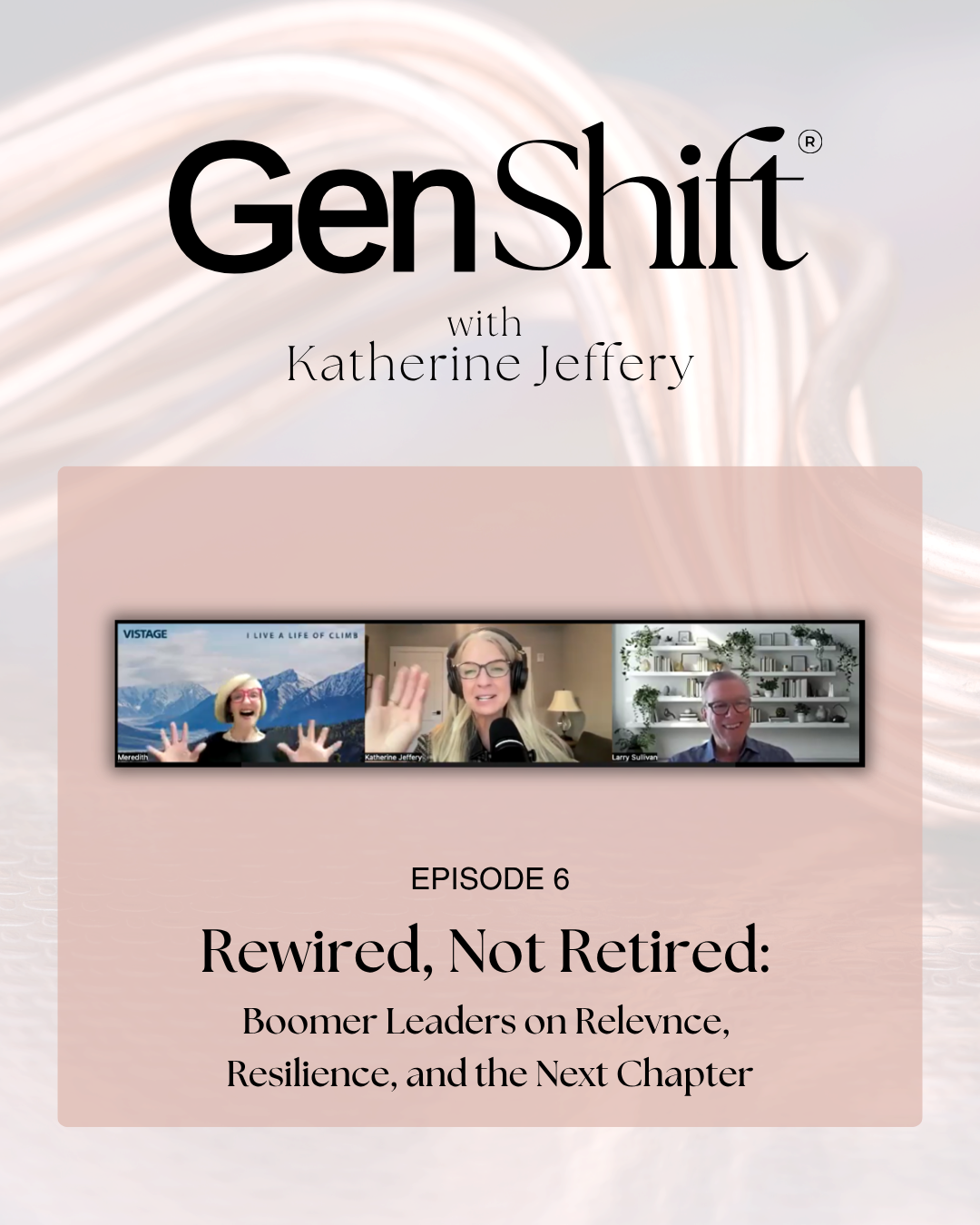
Episode 6: Rewired, not Retired: Boomer Leaders on Relevance, Resilience, and the Next Chapter
Listen
Description
We talk a lot about emerging generations—but we don’t talk enough about what we can learn from the ones who’ve led for decades. Katherine sits down with Baby Boomer leaders Meredith and Larry to explore the insight, pattern-recognition, and emotional steadiness that only comes from long experience. They share how they shifted from command-and-control habits to more collaborative, empathetic leadership, and what younger generations often miss about the pressures and realities Boomers grew up navigating.
They also unpack relevance, legacy, and why many Boomers feel “rewired, not retired.” It’s a clear reminder that generational intelligence isn’t just about understanding the new—it’s also about listening to the leaders who’ve already lived through cycles of change.
November 24, 2025
Release Date
Guests
Meredith Eicher
Larry Sullivan
Katherine Jeffery: Welcome to GenShift, the podcast where we explore how generations see the world and what happens when we actually listen to one another. I'm your host, Katherine Jeffery, a generational strategist and speaker. I created GenShift to spark honest conversations about how work, life and leadership are evolving across generations, and how understanding those shifts can make us better teammates, better leaders, and even better humans.
Today's workplace includes as many as five generations working side by side. This mix can obviously be challenging, but it's also one of our greatest opportunities. Leadership today isn't just about strategy, it's about empathy, adaptability, and connection. And in this episode, we're shining the spotlight on baby boomer leaders.
Leaders who shaped organizations, built careers from the ground up and navigated decades of change. We will talk about what has endured, what's evolved, and what younger generations can learn from those who've been leading long before hybrid work or AI strategy we're even part of the conversation.
Before we bring in our guests. Let's set the scene. Who are the baby boomers? They were born between 1946 and 1964. Boomers came of age during a time of post-war prosperity and social transformation shaped by events like the Civil Rights Movement, Vietnam, and women entering the workforce in record numbers.
Katherine Jeffery: They're often known for being hardworking, loyal, and competitive. A generation that equates effort with integrity and success with perseverance. Many built their identity through career longevity and achievement.
Boomers have led our largest institutions shaped corporate culture and set the norms for professional advancement, and now they're leading through an era of digital transformation, hybrid work, and intergenerational teams where younger employees are redefining success around balance, purpose, and inclusion.
Navigating all of this requires a new kind of leadership, one grounded in both experience and openness to change. So Larry and Meredith, I'm so glad you're both here, and I'd like you to take just a minute to introduce yourselves and give us some sense who you are and what you've done, because you haven't been sitting on a sofa for the past however many decades.
You've actually been out there really making a difference in the world. Larry, why don't you go first.
Larry Sullivan: All right. Just quickly. First generation college guy for my family of five. Was in the leadership program at NCR. Moved on to work for several different technology companies and leadership roles, including Apple and IBM. Took a job inside as a leader in technology at Southern Wine and Spirits, but also did some operational roles there.
I was in charge of safety as a VP for a while and asset management. More recently, eight years ago with my wife and son, purchased a renewal by Anderson dealership, which we sell, install, and service doors and windows. Built that company from 23 employees to over 300 today.
Katherine Jeffery: Incredible. Thank you Larry. Meredith?
Meredith Eicher: I would say that across my lifespan, I have worked for someone, I've worked with, someone I've worked in a family business, developed my own business. Then realized that it was not just all about success and title and climbing the ladder of my own business, it was about how I can make an impact.
While I've been in all the different roles of having worked, that today I'm blessed and honored to be able to make an impact through working with leaders on how to become better people, to make better decisions and get better results.
That's who I am, that's what I'm doing.
Katherine Jeffery: I want everyone to hear the wisdom that you're gonna hear in this episode is hard earned and deserve it. It's very worthy of your attention.
So thank you both for joining us today.
Let's first start with a little bit of your stories. How did each of you first step into leadership? And was it intentional or did it actually happen gradually?
Larry Sullivan: Ladies first.
Meredith Eicher: Aw, thank you. That's indicative of our generation, so thank you very much, Larry. It's, I appreciate that. I feel like you'd open the door for me, if you were standing right here.
I love that question. Primarily what came to mind, just right off the bat for me was Girl Scouts or my Brownie troop. We formed little patrols, that's what was called, and someone had to lead the patrol, someone had to step up and, do it. I think that's where I first stepped into leadership.
As crazy as that sounds, I realized that ooh, I could have influence if I raise my hand.
Katherine Jeffery: And how old do you think you were Meredith at that point?
Meredith Eicher: I think I was eight or nine, second or third grade.
And I think that was demonstrated by my mom, who would've been in the traditionalist generation. So she was a little ahead of her time, but I saw that leadership through her and I think that was part of it. Yeah, I think that was an influence, if you will.
Katherine Jeffery: Certainly. Yeah.
Meredith Eicher: Larry, how about you?
Larry Sullivan: I'm excited to join this conversation about leadership across the generations.
I'm trying to think of the first real example. When I was in high school, I was the vice president of my senior class, so maybe that was the first leadership thing. But I think more, really, my first job outta college was NCR, our National Cash Register, which many would not remember, but they had a very formal training program.
It was great. I spent nine months in Dayton, Ohio and was a top sales person, but I always wanted to be a manager. It felt honestly, it felt like the next step. I don't know if I really knew what I was getting myself into, but I was always pushing to be at the next step. The little sidebar for me was every year I was alive, I wanted to make another thousand dollars.
So that's a boomer thing. When I was 25, I wanted to make $25,000 and 28, I wanted to make $28,000. And it was around 30 when I became a district manager for NCR. So I think I, I broke out of the $30,000 mark.
That's very nice.
Meredith Eicher: But, and it's interesting that thinking about stepping up, that was what you did.
That was how you got recognition. That success was equated with that. If I worked hard, people would see me as successful.
Katherine Jeffery: Yeah.
Meredith Eicher: And that was how I thought of it. For me, it wasn't so much the money, it was more about the success of what other people would see. Hard work was success.
Larry Sullivan: I always felt like you had to strongly advocate for yourself. And I don't see younger people do that as much anymore, or aren't cognizant of the necessity of that. It's something you have to do or people won't just notice you if you're just there.
Katherine Jeffery: Yeah. There was a process a way forward, and if you did certain things, you could achieve those milestones.
Larry Sullivan: I was measuring the milestones in money, but also with responsibility. And when I was 30, I did have 10 people working for me. I had to move lots of change. Moved from New England down to New Jersey and actually it was that time that at and t bought NCR, so it was a whole different environment.
It was great. It was a sign of growth to myself and I think a sign of growth to others who saw me taking those chances and accepting responsibility and were willing to trust me, which I think is a big part of leadership.
Katherine Jeffery: Sure. That's good. Okay. For both of you, when you look back, what's one leadership lesson that has endured through every season of your career?
Meredith Eicher: I'll defer to my colleague since he let me go first.
Larry Sullivan: For me it's management by walking around, no matter what time I come in, whether it's 7:00 AM in the morning or noon, I make a point before I sit down and open up the email to walk around, see who's in, see what they're up to, how they're doing today. Try to make a personal connection with them and just get a pulse of what the vibe is in the office that day.
And it makes a big difference because connecting with people I think is an important part of leadership. That's an enduring lesson for me that I do every single day.
Katherine Jeffery: Yeah. So that personal touch and building that relationship in those small moments.
Larry Sullivan: Yeah, it's a big part of my management style.
I'm not the greatest metrics guy. But I think I have a pretty good EQ, and can relate to people quickly across the generations. I'm a good listener.
Katherine Jeffery: Excellent. And EQ, as we know, is so important in today's world. Like it's hard to be a good leader if you don't have a strong emotional intelligence.
Larry Sullivan: Yeah, I agree with you.
Meredith Eicher: I couldn't agree more. What really comes to mind was being a listener. Whether it's 10 or 30, it's like, what's the need and concern of each person or each group.
'Cause oftentimes we can overlook that. And the more that I can listen for that need and concern, that's where I can bring empathy into it. That makes a connection.
To your point, Larry, the connection is vitally important. I think it creates a sense of we care, we're listening we want you to be the best you can be. And listening, empathy, connection, that has served me well all through the years with the generations.
I wasn't always a great listener. It is a learnable skill. Early in my career, I thought I had all the answers, and I was ready to prove that I had all the answers. Not so much.
Larry Sullivan: I think you make a good point. I think when I started out, it was the command and control sort of thing.
Yep. I had to be large and in charge. And, enduring thing for me is, letting that go, collaborating and empowering, allowing people to take chances that are beyond my control and knowing through maybe years of experience that most things work out. And if they don't work out, it's probably for the best for both parties.
As long as it's approached professionally and, you communicate all the way through. There are no really bad outcomes, they just, sometimes they take a turn, you don't expect, but sometimes that term is dramatically good.
Meredith Eicher: You said something that really spoke to me. We did come up in a command and control and that's what was in place.
And I can remember my father, and I can remember him say, if you'll just do what I asked you to do. In other words, just do what you're told to do.
And I think early in my career I had those words and I. began to realize that's certainly, not the style.
Larry Sullivan: Yeah. I mean, I now feel if I and I make the differentiation of that command and control being management and not leadership. That kind of command and control delivers the stated, desired result.
If it all works and a leader is leading you to something, hey here's what we gotta get done, but here's what we wanna get done. If you can get outta your comfort zone and we can do things well, we're gonna end up here. And the rewards are not just feeling good about yourself.
There's monetary rewards, there's potential professional development rewards. I think the whole leadership discussion has changed. That was very common in command and control, but now it's a different, it's a different discussion.
Meredith Eicher: I agree to a certain extent about the management, that was in a management style.
I think it crossed over to leadership in some ways. I think that it cost us something, though. It cost us that relationship. And I began to realize that was a defining moment in leadership for me is when I got some feedback that not everyone in the office thought I was a wonderful leader, boss.
Whatever. I would say, oh, I work with people. And they were like, yeah, those are your words have an expectation of us being here at 6:00 AM like you are and stay until 7:00 PM and all of a sudden you get feedback that maybe you're not as loved and might wanna take a look at adaptability to who you have around you.
Larry Sullivan: I agree.
Meredith Eicher: And that it's different generations.
Katherine Jeffery: What were those moments like for both of you? Because it sounds like you've shifted the way you lead throughout your career. So those moments, Meredith, that you just highlighted, where all of a sudden you learn oh, people don't like the way I'm doing things and I thought I was doing a good job.
Like I'm working hard, I feel like I'm doing the right thing. And then you let your people reflect back to you. How did that impact you and maybe even motivate you as you move forward in your career?
Meredith Eicher: I just can remember the feeling was like, oh my God. And there was a little level of defensiveness.
Of course, that's just a human condition. Part of our emotional intelligence development, it's okay, wow I've gotta take a look at myself. I've gotta be willing to take a look and to say, what am I not hearing? What am I not seeing? Where are my blind spots? But most importantly, what can I learn from it?
There were different generations. It wasn't all one generation. I had three different generations. So I didn't have the truth with the capital T and wasn't the end all be all, and what could I learn? And I think that was a major shift for me to be willing to say, I don't have all the answers.
And perhaps being more open to another way, another perspective. It is definitely vital in leadership and how we lead our organizations.
Larry Sullivan: Yeah. To tap into that.
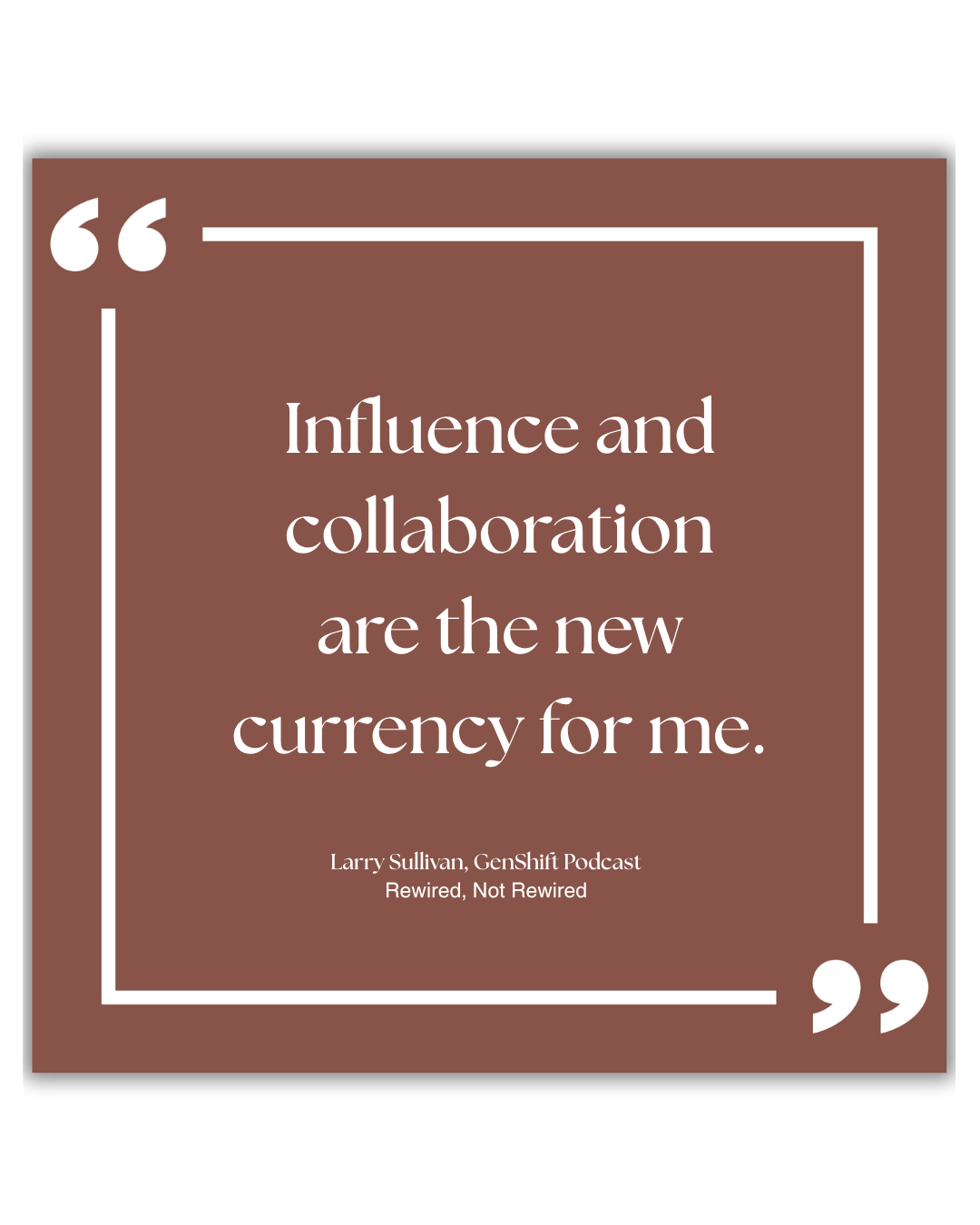
I mean I've realized over time that influence and collaboration are the new currency for me. Being able to convince people of things. And before going into the meeting, talking to several people who are gonna be in the meeting, hopefully to get the outcome that I desire and the collaboration that I expect when I get in the meeting.
Creating a space for, diverse opinions and learning from that. It's different way of saying, which you said just, meeting people where they are hearing what they have to say and having an open mind. It's such a dynamic workplace and even social situations now that thinking you've got it all down pat is naive. I need to stop thinking linearly and, accepting different opinions.
Katherine Jeffery: So is it safe to say. That we never get it all right, and that's okay. We just need to keep growing. Would that be a safe assumption from the boomer generation?
Meredith Eicher: Absolutely. Yeah. I'm hearing that. Absolutely.
Larry Sullivan: Yeah. Yeah. Does that come with age or what? But I don't know if I had learned that a little bit sooner, I would have saved myself a lot of stress. Time does allow you to see. My son is in the business and, 34 years old, and he's smarter than me, and he probably knows more about the business than I do.
What he doesn't have is that 30 years of talking to people in the outcomes and the conversations and the anticipation of what they might do or say. And that just simply comes with time. So there's value in the years.
Katherine Jeffery: That's right.
Meredith Eicher: Yeah. When you said that, Larry, I had that thought of, I'm working with a company right now where I think the average age is about 28 to 32 maybe.
And the first session that I had with them, it was gonna be around just leadership, communication, all different varied topics. And I walked in and they were all sitting with their arms crossed. Literally I was like, oh, Lord. I just thought what's gonna happen here? And I reflected back, to when I was that age and I thought I had all the answers and so forth.
I started laughing and somebody said, you're making fun of us. And I said, no. I said, I was reflecting upon myself in my first development meeting what was this lady gonna tell me that I didn't already know about communication? I said I can only imagine what you're sitting there thinking. And I said, I understand. So what I know is over the course of time, it would be my hope that I'll earn your trust that I'm in it with you and, wanna be of value and relevance.
Larry Sullivan: Yeah, I'll say this, it is an odd feeling to be the oldest person in the room, which often happens with me. I don't know if that happens with you, Meredith.
Yeah, it does, but other company that I am always in the oldest person, and even in my Vistage group, I'm among the oldest people. But I enter a meeting and it really enter my day being curious and wanting to learn something. That's why I am there. It's less now about, making money and advancing and going up the ladder.
It's more about what can I learn each day when I go to work?
Katherine Jeffery: Meredith, you mentioned the word relevance. I hear a lot of boomers say that I wanna stay relevant. What are the two of you doing to stay relevant in this world that's changing so rapidly for everybody?
Meredith Eicher: It's so blatant, even from what I choose to wear depending on what company I'm wearing, something totally different when I'm walking into that particular company I was referencing to, if I'm walking into an older group or what have you I think about that.
It's a win for me. If that group says, oh look, she's a boss, babe, look at that outfit she's got on. She's owning those, shorts and blazer. And I'm like, okay, yes. I'm, all the way to the relevance piece of am I staying current with what's important to them?
Again, I go back to what are the challenges that they're having in leadership? What are the challenges they're having in managing people? What is it that they're coming up against in their personal lives? What's important to them? It's vitally important to stay relevant and bring it forth in a way that they can relate to.
Katherine Jeffery: Definitely. Larry, what about you?
Larry Sullivan: I'm a social media maven. I'm the TikTok guy, so everybody makes fun of me. But I can tell you what's happening in fashion. I can tell you, what star's do and what I'm looking at.
Trips to Europe and I'm also, since I have a little bit more time now, really trying to push and learn AI in, in yes. In a leadership way that, I did my prep for this whole call using AI, and it's great. I did a tomato sauce recipe last night on AI. I was thinking of going to the F1 in Monaco in next year, and I did the AI.
So I'm trying to learn all of the different nuances. And I do think though, you hit on something Meredith clothing is important. I pay a lot of attention to the clothes I wear and try to, without looking too young, mirror some of the styles of the younger people in the organization, particularly if it's somewhere I'm going to visit.
I've worked at IBM and years ago they told us mirror the customer. Was the expression. So you always went the first time with your blue suit and your red tie. But if the guy was dressed down and just wore a sweater, next time you wore a sweater, next time, and those are the old fashioned, maxims that still hold true today.
Meredith Eicher: Sure. Your objective is to connect with them.
Larry Sullivan: Yeah. Yeah.
Meredith Eicher: I mean
Larry Sullivan: assumption is reality for a lot of people, and if you can make that immediate connection with them, whether it's, through clothing or something contemporary sports, I always think that's really important 'cause you can get to business a little bit later after you've made the connection. Kids family travel on another level and it just breaks down those walls. I think especially a generation Z and even millennials to a large extent, who are not particularly comfortable talk to people off the cuff, like you and I might be and have been forced to do forever.
Get in there and do that.
Meredith Eicher: To your point about AI, I'm all over it. Used to do a bunch of role play in front of the room, which to your point in the Y and z, it's not overly comfortable. And I totally understand why. And I'll say hey, how about this?
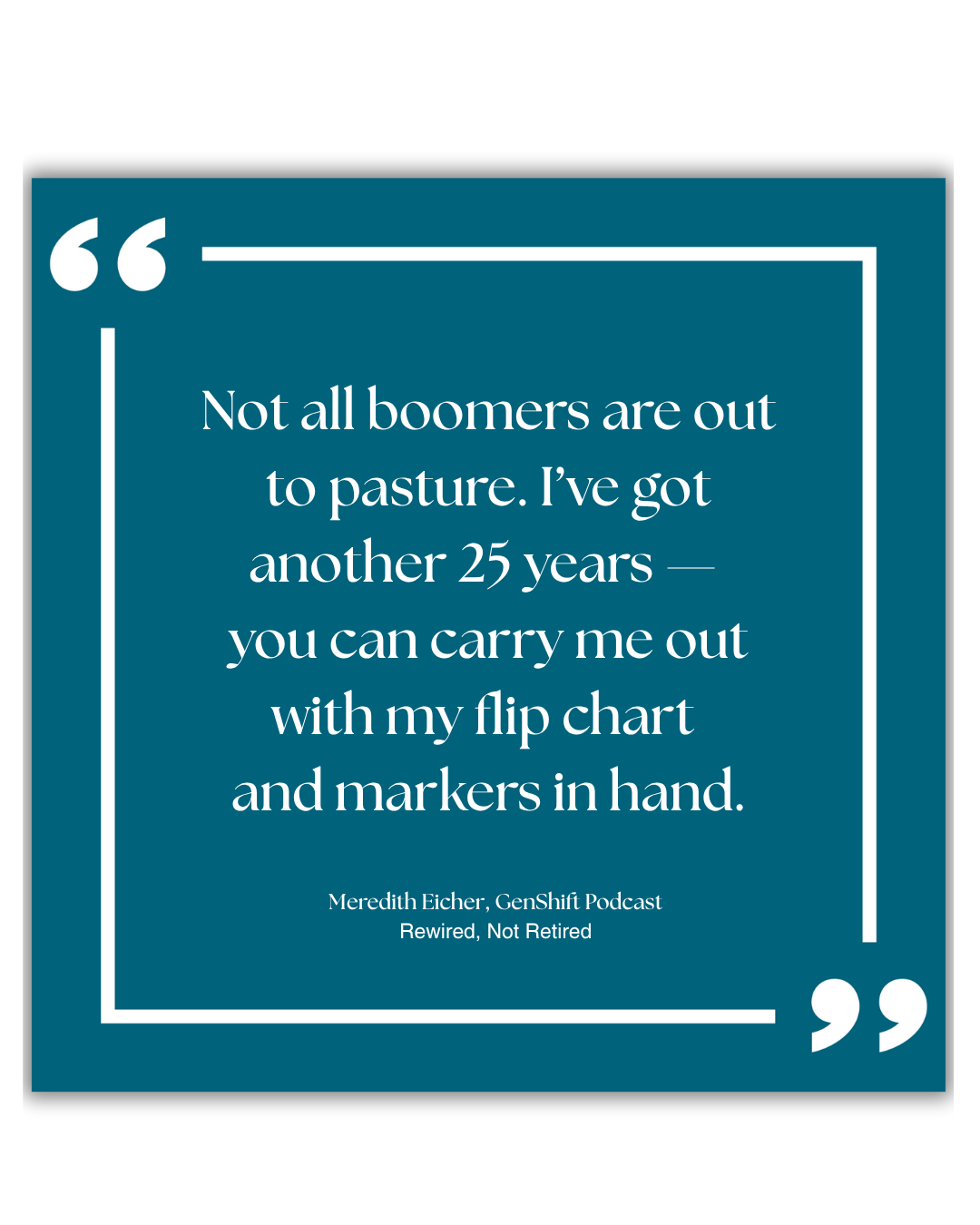
Why don't we role play it using AI? And I'll say, give me a situation. Let's do it. And then let's talk about how we would coach the AI interaction. And they get the biggest kick out of that I, would think of it. And my deal is to demonstrate that not all boomers are out to pasture.
I've got another 25 years, you can carry me out on a flip chart with my markers in hand, and please by God in my coffin, please have the flip chart there 'cause I will not be comfortable.
Larry Sullivan: My kids used to say to me, what did you do to work today? And they said, did you make charts? Yeah, I did. I made charts.
Katherine Jeffery: Used a lot of paper. A lot more paper than they would.
Larry Sullivan: A lot of, made a lot of charts.
Katherine Jeffery: So tell me this, when COVID hit, boomers retired at a much more rapid rate than what was expected.
And I think a lot of them were just like, there's so much change. I've done my time, I'm bowing out. And you two have still stayed and not only stayed, but you continue to evolve and adapt and work hard to understand and connect. What is driving that?
Larry Sullivan: I'll speak for myself, and I mentioned it earlier, it's the drive to learn. And plus I adversity drives me that, old fashioned maybe boomer thing for my dad. When the chips are down, you double down, and at our company we were fortunate that we sell doors and windows. We doubled down used that to expand the company. And it was great. We learned a ton, we did a lot wrong. We did a lot right. But I think people in the company grew. And I still get after it, just because really more the people in the learning than the other things we mentioned earlier.
Meredith Eicher: I had the same thought process. I can remember sitting there thinking, oh, everybody's gonna quit my peer groups. There's gonna be no one-to-one coaching. How long can I survive? Went through that little mental exercise very quickly.
And I stood up and I said, we're gonna figure this out. I'm not laying down, I'm not going home. And I remember texting my couple of folks that we worked together. I said, meet me at the office. And it was immediately about, we're gonna send folders to everyone. They're gonna get Zoom instructions.
And I remember one of my assistants saying, you don't even know how to use Zoom. And I said, we're gonna figure it out. I said, we're gonna do it right here. We're gonna write the instructions. And within two days everyone had what would look like their peer group meeting. They had the setup, they had their name plate, they had all of the things.
And I said, every time we fire this, zoom up, I'm gonna have somebody ready to help you. And I led with vulnerability. Also, when our first few meetings, when we were getting on, I said, Hey gang I'm in it with you. We're gonna get through this. And I said, we're gonna make it. Every single company here, no one's going down on my watch.
And no one went down and not one member went on sabbatical or left the group. That whole perseverance piece and ambition of we're gonna figure this out, and I applaud Larry's learning piece. I think for me it was just that competitive, I'm gonna figure it out and nobody's going down on my watch.
So it's that level, it's the mindset.
Larry Sullivan: I will say and I don't know if you feel this way, Meredith, but I have an element of fear that was instilled in me by my parents. So when COVID came, I was fearful, and that's a motivator for me. I think me, maybe less so for other generations, but I will not fail kind of thing.
So I don't know. Do you feel that way, Meredith? To sometimes hear
Meredith Eicher: Yeah, I think in a roundabout way without using the word fear, that's what I was talking about.
Katherine Jeffery: Yeah.
Meredith Eicher: In that I immediately calculated what assets did I have? How long could I survive? There was this fear of what if I can't go past one year?
So that was the motivator too, in its own way. It was like, Uhuh, I'm not gonna let it overtake me.
Larry Sullivan: Yeah.
Meredith Eicher: I certainly had desire to take, care of my members and the people that I worked with. But I think you make a very good point, and I say that today.
People say, when are you gonna stop working? I'm like, stop working. I don't even think about that. First off, I don't look at what I do as work. It's truly pure enjoyment for me. And like stop working. I'm always gonna be moving and shaking. And my goal is not to end up in a nursing home.
Larry Sullivan: Yeah. My thing is I say I'm rewired not retired.
Meredith Eicher: I love that rewired. I'm stealing it, Larry.
Larry Sullivan: It's good because it says you're still in the game, and people say, what does that mean? I say I do more of the things that are business oriented that I like, unless of the things that I used to find, tedious and repetitive, now I'm looking to lean in on the things that I always liked. I have that luxury. Mentoring is one of them.
It's a million of them.
Katherine Jeffery: Okay. Another thing I hear boomers say a lot is that they wanna leave a legacy. What does legacy mean to you now compared to earlier in your career?
Larry Sullivan: Geez. I think earlier in my career I would've interpreted that as an economic statement. Once you get to a certain point, where you're economically safe or not too worried about that kind of stuff anymore. What I wanna leave is a legacy of I was approachable. I listened, I took the time. I empowered people. And I provided opportunity for them to succeed. In our workplace, there's weird little measurements, 'cause it's mostly a blue collar workforce. They buy their first house, they've decided they have enough money to have a child.
They buy a big old pickup truck. And when those kind of things happen, I think to myself, that wouldn't have happened if, Sharon and I and my son did not, provide this conduit for that to happen. So that's the way our measurement myself these days.
Katherine Jeffery: I love that.
Meredith Eicher: I think the word and concept of legacy has truly shifted over time. And I have no doubt that there's been influence. From different people and even generations along the way. I can remember thinking my legacy was about if I could be governor, then I could do these things and accomplish these things.
And somewhat equated with going up the scale. Not so much financially, but I could take charge, be in charge, get things done. Again, there comes that whole work thing.
But it has shifted and it has shifted to have I been impactful, have I made a difference? If it's just for one person, one nugget in a room or in a conversation. Whether it's one conversation during the day or with a room full of people have I created impact? Have I caused them to think about impact and making a difference in other people's lives?
The monetary, the possessions the title, the, rise to the top, president of this. All that shifted to what's really important and it's the, it's people. It's people and how they find their purpose, their happiness, their joy, and if that means they achieve something in their company or did something or I provoked a thought and that, that led to that. That's impact.
Larry Sullivan: I love that.
Meredith Eicher: I just have to be me.
Generational differences show up everywhere in workplaces, classrooms, and even around the dinner table. Too often they lead to frustration instead of connection. That's why I created the GenShift dialogue deck with thoughtful questions for every generation traditionalist. Boomers, Gen X Millennials, Gen Z and Gen Alpha.
It's a simple tool that helps groups move beyond stereotypes into meaningful conversations. It works with teams, students, and families alike, and the deck is just the beginning. As a generational strategist and leadership consultant, I work with organizations to turn generational differences into strengths.
Through keynote talks, workshops, and long-term consulting, I help leaders understand what drives each generation and how to bring out the best in all of them. When we learn to listen and lead across generations, teams are more innovative, inclusive, and effective. Discover the tools and training that build generational intelligence.
Explore the GenShift dialogue deck and my services@katherinejeffery.com. Start bridging the gap today.
Katherine Jeffery: Okay. You both came from a world of command and control, so there was a lot of structure and certainly a hierarchy.
How have you found a way to balance that mindset with all the collaboration and flexibility that today's workforce is demanding?
Larry Sullivan: I'd say speak less was the first thing that came to my mind. 'Cause I used to sit at the head of the table, it's speak. Now I sit at the head of the table and listen. And sometimes it's dramatically hard.
But I think it works. I think the generations wanna be heard. And sometimes, they'll tell us things that I'll say, we can't change this all today. We have 300 people in the company. And if this is a process that you feel you can improve, it might take us a little while.
But just listening and hearing people out is so powerful. 'cause they feel included and heard, and that's such an important thing.
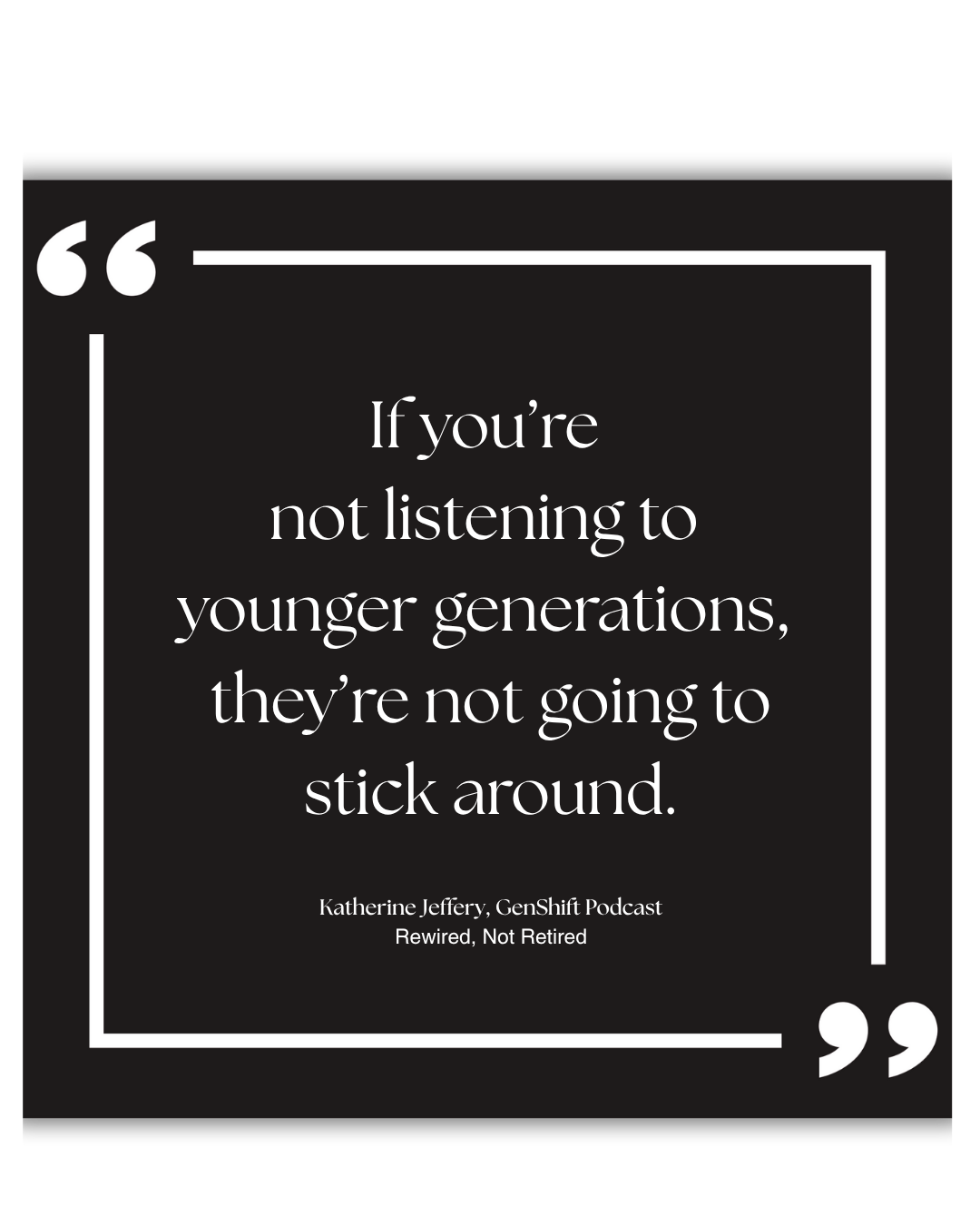
Katherine Jeffery: It's so simple how you said that. It's so good. And I always tell people, if you're not listening to younger generations, they're not gonna stick around.
And so it's essential that you've learned that skill.
Meredith Eicher: Absolutely that came to mind. And with that, asking the question, the open-ended, what are you thinking? How do you see it? What's working for you? What's not working for you?
Asking those open-ended question oftentimes could flush out a way you might be able to create a change.
Katherine Jeffery: It sounds like both of you as you've aged and become more experienced, like you started your journey and it was about you moving up, right? You getting more, you having more opportunity, more money, whatever that might have been. But now the shift is how can I equip and empower other people and help them move up in the way that they want to move up or to be seen or to develop.
Meredith Eicher: We were talking about how legacy has changed our concept of leadership has changed. Leadership was about getting things done, commanding control here's the plan. Let's do it. We need a hundred people. I'm gonna get 'em out there. We're going and now it's evolved over time of empower inspire mind for the talents.
Of those, instead of forcing them, it's more about let's look at what are your talents, what are your strengths? What is it, that you bring to the table that can be utilized? We're responsible for bringing that out and empowering a shared end result, getting on board.
That's leadership to me. I think it has transformed.
Larry Sullivan: I'm a lot more empathetic than I used to be. I try to put myself in a younger person's shoes, I think, all of us have accomplished a lot and it was not easy to do. But I listen and I hear just how difficult people feel getting ahead is buying a home or moving up the ladder or even getting their college degree or some of these things, some training.
I put myself in my shoes and think about myself back then, and a lot of that stuff I was very self-motivated to do. And maybe they're not so much and they can benefit by my experience and, leadership and guiding them along the way.
Meredith Eicher: I love that. I do too. I think that is spot on and that speaks to the empathy. There's sometimes I'll say, wow, you're in the thick of it. They've been married three or four years. There's pressure to have a child. And to move to the bigger place.
And I always say be able to listen and share. To the extent they want the sharing, I never wanna tell. It's not about telling. It's about being in it, understanding the emotion that they're feeling at that point in time. If I can identify that emotion, then we can step together.
Katherine Jeffery: And you hear empathy like Gen Z really wants empathy, right? They want you to understand them. They want you to meet them where they're at and to know I have all these other concerns and worries.
And yeah. So that's such a needed skill in today's workplace. And, I've heard a lot of baby boomers, like sometimes I'll say, you need to care about younger generations as whole people. And I've had boomers say, but we don't care. And I always laugh 'cause I'm like, it's not 'cause boomers don't care about people.
Obviously you both deeply care about people in the relationships in your lives, but when you all went to work, you left your feelings at the door and you were there to get a job done, right? Feelings weren't really a thing that came to the meeting room with you. You kinda left them outside and you were there to get results.
Meredith Eicher: Oh I worked for my dad early on and for my first six or seven years, and he said, you're too emotional. Nip that in the bud. Pack that up. Leave it at the door. So I know that impacted my next five years after that until the feedback 360 or whatever it was called but then I realized, okay, things are changing.
Larry Sullivan: Yeah, I was told that a lot of my career that I was too nice a guy. I was a vice president of most of the last 20 years of my corporate thing. But I guess I didn't have the cutthroat inness to rise to the next level.
There was always an interesting conundrum to me and somewhat disappointing that was people's perception. And I, and when I say people's, I think that was probably an x's evaluation of me, Larry. You need to be more assertive. Maybe that's the right word. But I do think in the longer run it's served me well, both personally and professionally to be empathetic. It's not something that's always easy 'cause it takes extra time to put yourself in somebody's shoes, but I think it's rewarding.
Katherine Jeffery: Yeah, I think that's a good way to sum that up, Larry. What differences between the boomer generation and the way that, you all learned, how to excel in the workplace and the way younger ones are choosing to do that?
What ones have surprised you the most?
Larry Sullivan: I could say I was never a very intuitive person. I was a plugger. I was the person that stayed into study and didn't go out for beers. But I, feel like, with the amount of information, the pace that communication goes now, that young people come to the discussion better informed in a lot of ways than myself, and I need to be better prepared.
So I guess what I'm saying is. It's a little bit of a luxury for them now that I don't think that we had to be as well informed if you wanted to be informed about something when we were early in our career, you had to be more deliberate about it. I think that sort of information now is more available and can be consumed more quickly.
So I'm still that way. Still try to control, my environment in such a way that I'm well-informed before I do something. But I do think that they have the ability to do that in maybe in a less stressful more condensed way.
Katherine Jeffery: Yeah, definitely. Yeah.
That's a really good insight. Meredith, what about you?
Meredith Eicher: I think about, we just did it. We jumped in, I jumped in. It was a little bit of just do it. Trial by error. Just, it was in the doing more and jumping out, taking the risk. I think about how I started my first business, I stolen computer program and 200 bucks and borrowed computer kind of thing.
We just did it. And I think there's quicker accessibility to data and information and they're I see in some aspects that they're armed with that they've got that information, they've got that data, and that can serve very well. And it can also not serve it, it can be a holdback, maybe a little distrustful.
And I'm like, let's just do it. We'll figure it out. Let's just jump in.
Katherine Jeffery: Yep.
Meredith Eicher: And that can be great too, but also being informed can be great. So there's some balance there.
Katherine Jeffery: Yeah. It can lead to analysis paralysis, right? Like gimme more data, gimme more research. And one of the things I was just talking about yesterday was one of the beautiful things boomers are bringing into the workplace is that intuition or that gut, right? Like you just do it and you figure it out as you go.
Where younger generations tend to be much more hesitant. I've gotta think about this. I've gotta process this. I wanna understand this. And so when you bring those two together, like you said, there's some really beautiful things that can come out of it. And so I think that's when we miss that generational connection, we're leaving some of those integral pieces behind of what we need to be successful as we're moving through this transition that we're all in.
It's interesting, as a Gen Xer, the Nike slogan was always Just do it.
Larry Sullivan: Yeah. Oh yeah.
Katherine Jeffery: And there's a recent Nike commercial where it's what happens if you don't do it? And I thought, what an interesting shift.
Larry Sullivan: Yeah.
Katherine Jeffery: Wow.
Larry Sullivan: That's good. It's powerful.
Katherine Jeffery: Yeah.
So can either of you share a story where a misunderstanding across the generations actually became a learning moment?
Larry Sullivan: That's a challenging one. I think that, i've misunderstood young people's intentions at times as being disinterested, their approach to things being disinterested and I've taken that to mean don't wanna do this, you don't want this opportunity. You don't want this project or this task.
I've come to learn that I'm not presenting it right. And by that I'm not either providing a safe space, as we talked about earlier, for them to feel comfortable extending themselves into something they don't know. I feel at least in terms of mentoring with a younger person, that my job is to tell them.
To try to acquire skills and experience, both specific in general at our company. If they're only gonna stay for a shorter period, three to five years, I think it's the duty of business owners to, to be constantly challenging 'em and providing professional development in areas that they can grow.
'Cause if they're gonna go, they're gonna go and we're providing somebody to another company who's ready. And I'm just darn hoping that other companies are doing the same. Coming back to your original question the opportunity for me is to not be so quick and unthoughtful about people's reticence to do things.
Take the time to understand the context of why they don't want to do it. Try to provide, more information and a safer space to make a decision they feel is a good one and a good one for them personally and for their career.
Meredith Eicher: Love it. I can remember the first employee that left and thinking, where's the loyalty? Then it, you go, it's a personal attack or what have you, and it was the, one of the shifts to say, okay. What am I not hearing? What am I not paying attention to? And the misunderstanding was really, I had brought them to a place where they wanted to launch on their own.
I had created this level of ambition and they've been empowered. And so I think if I put myself back in that I'm looking through the eyes of a boomer thinking about loyalty and, hanging in there and there's gonna be more opportunity and that perseverance and all that sort of feeling.
And yet they're need for the independence and they've developed the ambition and. I think it was just a huge misunderstanding and six months later we sat back down.
Larry Sullivan: Interesting. I think that's such a positive way to view this. It really is, because when I think about it in my career and probably in yours, my loyalty was always to myself first.
It wasn't that I was disloyal to who I was working for, but Right. If you didn't see the opportunity or the challenge you just have to maybe move on. And that's not a failing of mine or another leader in another company. Maybe we've just taken 'em as far as they could go. The opportunities aren't available in the company.
Maybe the compensation they feel they deserve a need is not practical in the context of, the economics of your company. So that's a great lesson learned. Meredith I'm with you with that one.
Katherine Jeffery: Really good. It's shifted so much, right? We used to be in a world where it's come work for us.
You have this amazing career and now it's come work for us and we're gonna help you get where you want to go. Yeah. It's a huge shift and you've both learned that. And it's a hard lesson for older generations because that's not the way the world of work worked for us. And because now younger generations is like this is what I wanna do.
This is how I wanna get there, and how can you help me? It is much more transactional, shall we say.
Meredith Eicher: And one of the things that I point out particularly to companies where, perhaps it's a lower skillset or a lower level.
I said, get in the mindset that your purpose here is to empower and bring your employees to a level where they can move on and do greater things. So instead of being annoyed that they stayed for a year and a half, be excited about what can you provide to them in that year and a half.
Yeah, that's great. That's so important. That's a def, that's a different mindset. Then get as much as you can out of a worker type thing. It's a different mindset.
Katherine Jeffery: Very different.
So if we were sitting here and we had a millennial and a Gen Z or on this call and they were about to step into the C-suite, what would you want them to know?
Larry Sullivan: I would say lead with humility and purpose. Your role is not to have ideas, but it's to generate an environment where ideas can rise to the top That's not easy, at least for a boomer mentality, where control is an issue. But I think if for, future generations.
You're running an idea generation machine and as a CEO, you're parsing them. What are the best ones? What can we afford? What do we have the capacity to do? And if you have those things, there's training and empowerment for your employees and advancement. So I think that'll be what I would say.
Meredith Eicher: I would say a couple of things. One would be it's okay. It's okay. You don't have to have it all figured out or make an answer up. It's okay to be you. It is okay to speak up. I'd rather you speak up with the humility piece and understand that we really we're all in it together to figure it out.
And that the baby boomer sitting at the other end wants to hear, and perhaps at the same time be open to hearing different perspectives as opposed to dismissing what others may have to say. So it's being open. It's accepting yourself of where you are at that point in time.
Find your voice in a way that you're speaking other people's language as well with the humility and the understanding.
Katherine Jeffery: And how would you coach them on resilience or pacing themselves or even building meaningful relationships along the way? 'Cause you all have both obviously done that.
So what would you tell them about that?
Larry Sullivan: That's the hardest question you've asked. Resiliency, pacing yourself are not attributes I think that I was great at when I was a I dunno how you feel about that, Meredith. But yeah it's tough. If you're ambitious and, got an idea, whether you're, a rising emerging leader in a larger environment or out on your own, pacing yourself is tough to do.
I guess what I would say is you need to balance balance is maybe an overused word, and I hate to say work life balance. It's not that for me anymore. I think what I have found works for me in the last five years, or even 10 years, is more of a work life integration. A little bit of, the day is, doesn't start at eight anymore and end at five.
It starts earlier and ends later. You fit family stuff in there and a few errands you. Get a chance to do things during the day that, that it's a nonlinear day anymore. So my coaching would be around, make it integration, make it work for you, get the things done you need to do to get ahead and have your idea be flourishing and, completed, but make time for the things that make a life of life.
Meredith Eicher: Yep.
I think those are phenomenal points that I like the integration piece and not being linear. What came to mind for me as I zoomed in on the word relationship, and I learned this phrase a long time ago and it, and I'm like, ah, that's what I'm doing. And it was from Dr. Ivan Meisner, who was a founder of Business Network International and wrote several books about networking. This is where I heard it I don't know if it originated there, but he said, people do business with people they know, they like and they trust. And so if you look at that, it is about getting to know someone, creating that connection, creating that commonality where the like ability comes into play and we begin to trust each other.
And then that trusting comes through authenticity and the vulnerability piece. And you get these things working. Be likable to be heard. Generally the jerk in the room doesn't get as much playtime as the one who is likable, comes with those other characteristics. They build the likability, the trust the authenticity of letting you know who I am.
Katherine Jeffery: So your emotional intelligence really matters.
Meredith Eicher: Yes. Thank you for that summation. It does.
Katherine Jeffery: So important. Okay. And then final kinda last question here to wrap us up.
What do you hope future leaders carry forward from the amazing Boomer generation?
Larry Sullivan: I'm hoping that they just don't feel it's all about work achievement, that the, philanthropy, community, family which are all things I think that boomers laid the foundation for, or, the risers before us. And that there's a big focus now on building achievement. I hope not at the expense of some of these other community people, philanthropy, and I'm just hoping that's what we leave for them, a foundational place that they can grow off and see as they move up the ladder and take more years of responsibility and are really running the show.
Katherine Jeffery: Excellent. Meredith?
Meredith Eicher: What I desperately hope that they recognize the value of interpersonal relationship through conversation, through, through real spoken conversation that creates the connectivity. I've adapted to text, I've adapted to email. I love the capacity it allows for us and the expansion. And my true hope is that we recognize the richness of face-to-face, eye to eye, voice to voice and know that, that, is, at the end of the day, it's, it creates a deeper bond.
Larry Sullivan: Such a complimentary thing. Mine's lofty and yours is down to earth. And I think if you combine the two, it's really a good thing. 'Cause I think what you say Meredith, is really what it takes to do all of the other things.
Meredith Eicher: I think you're right. In a combined it's that we have a deep sense of caring and that's how it's developed.
Katherine Jeffery: Yep. So good.
It's striking how much of what you're describing really comes down to people trust, learning, and relationships that will last and the tools have changed, but the heart of leadership has not.
As we close, I'm reminded that leadership is never static. It's a living practice that keeps evolving with each generation. Larry and Meredith, thank you for sharing your wisdom and honesty today. You've both shown that baby boomers are not stuck in the past. They're still adapting, growing, and leading with their hearts.
At GenShift, we talk about generational intelligence as awareness, and empathy and action. Today's conversation showed all three of these in motion. When experience meets openness, everybody gets to grow. If this episode sparked something for you, we'd love for you to subscribe, share, and keep the conversation going.
You can explore more generational leadership tools and upcoming episodes at katherinejeffery.com. And if you haven't yet, check out our other GenShift episodes where Traditionalists, Gen Xers, Millennials, and Gen Z voices share how they're redefining leadership in their own way.
Thank you for listening to GenShift where generations meet to understand, not just respond, keep listening, keep learning, and keep leading with empathy.