Episode 14: The Real Reason Generational Conflict Won’t Go Away
Listen
Description
Dr. Katherine Jeffery makes the case that generational conflict at work is usually misread. It's not really an age problem. And treating it like one is where most leaders go wrong.
In this episode, she walks through her 3 C's framework: Care, Curiosity, and Collaboration and shows how three simple questions can shift the way trust gets built, conversations happen, and teams actually work together.
The takeaway is practical language that works immediately. No theory overload. Just real tools for leading across generations with less friction and more confidence.
March 17, 2026
Release Date
Guests
Dr. Katherine Jeffery
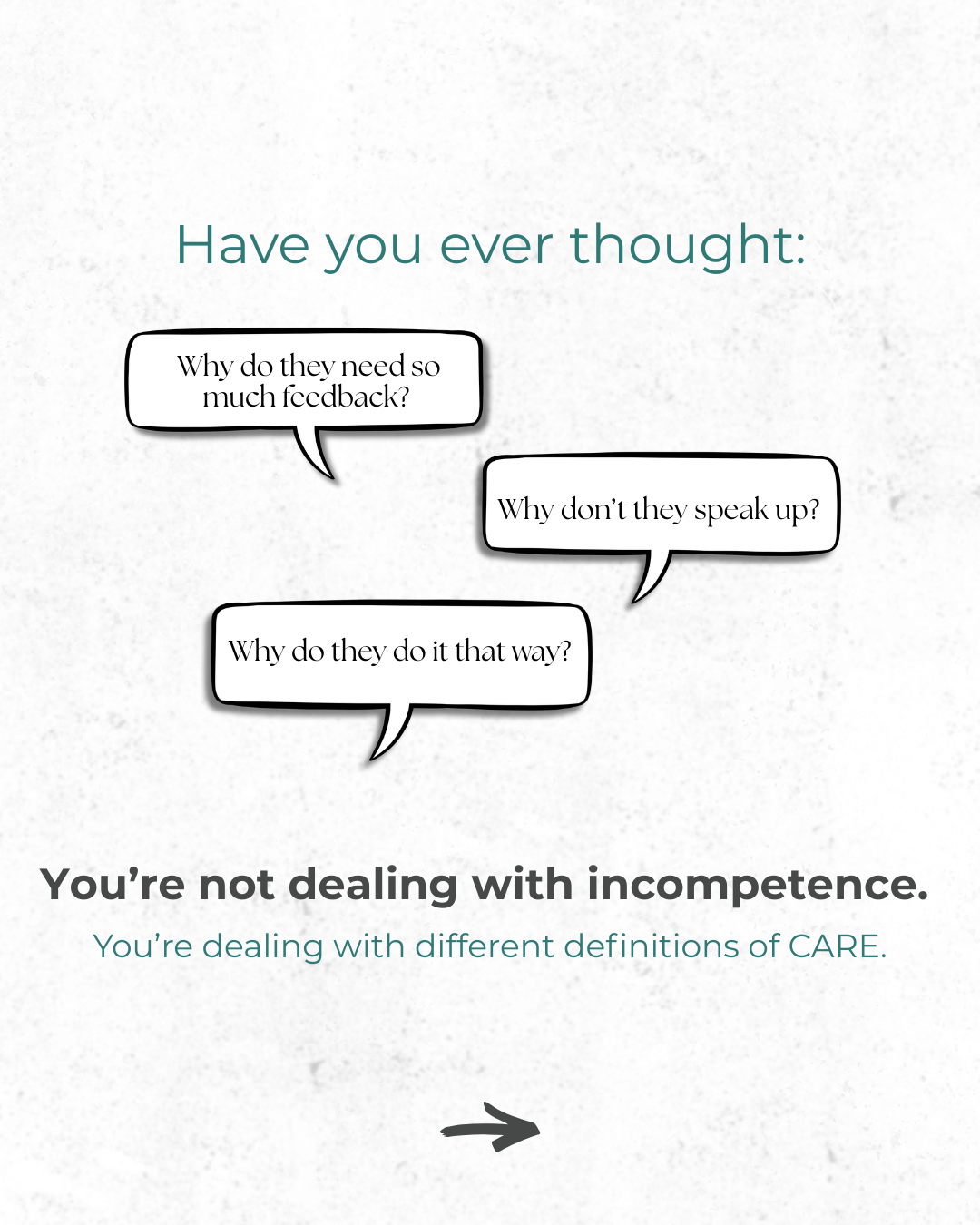
Katherine Jeffery: Have you ever worked with someone and thought, why do they do it that way? Or maybe why do they need so much feedback? Or why do they never ask questions? If you have congratulations, you've probably worked across the generational divide, and here's the good news. It doesn't have to be confusing, draining, or awkward.
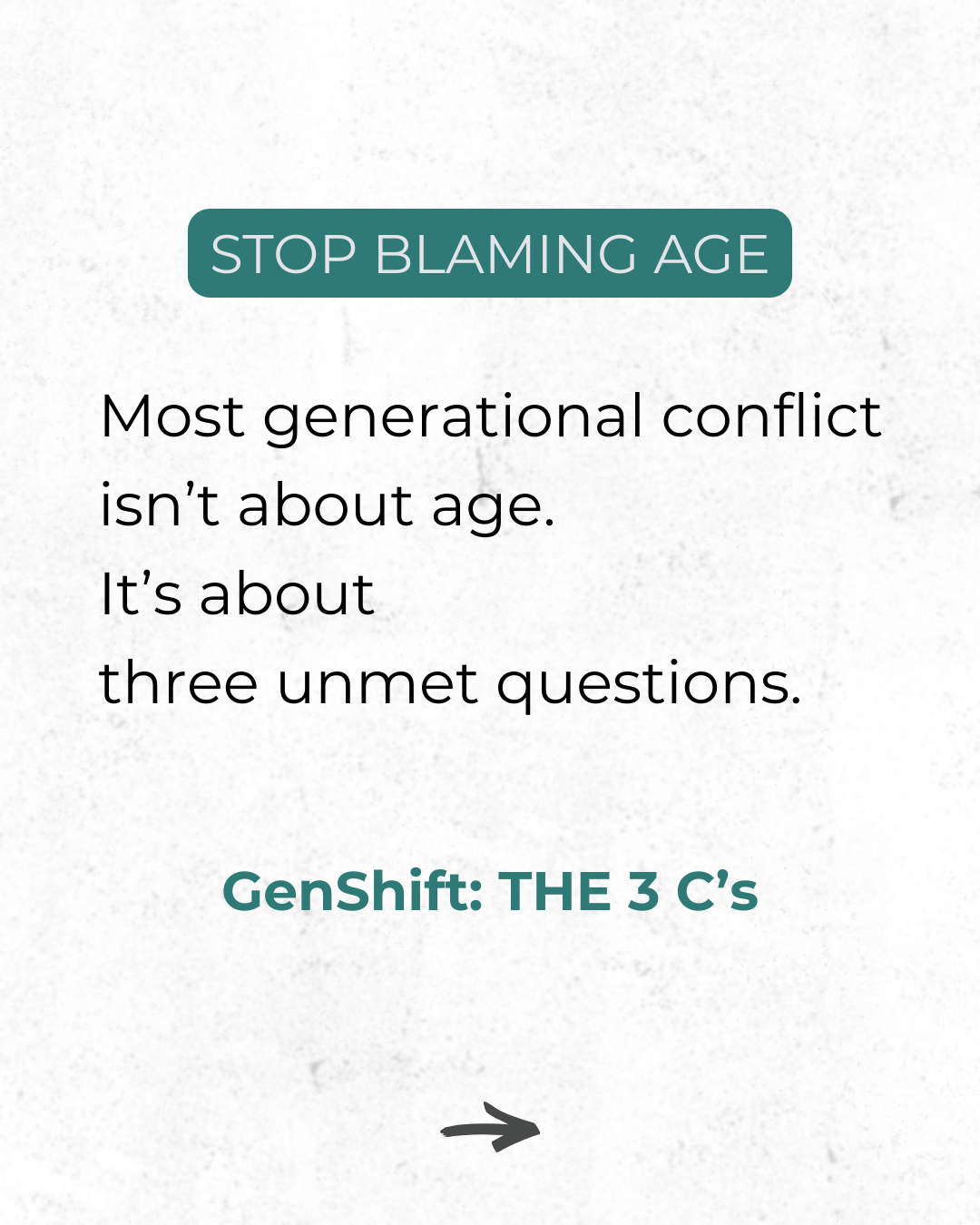
There's a simple shift that changes everything. I call it the three Cs. Care, curiosity and collaboration. And today I want to show you how these three small words can transform the way your team communicates and also how you lead.
Welcome back to the GenShift podcast. I'm Dr. Katherine Jeffery. Today's episode is just a little bit different.
It's just you and me. And, okay, full transparency. Solo episodes often feel a little like talking to myself in an empty room, but I promise it won't feel that way for you. I've got some insights today that I think will hit home. When I thought about this topic, it felt like a conversation worth having directly, because right now in every workplace, family, campus, and every community, people are trying to understand each other across the generational lines, and most of the friction boils down to these three questions.
Do you actually care about me? Are you curious about who I am and will you collaborate with me? Those three questions map directly to the framework I use in all my work care, curiosity and collaboration. Let's break them down in a way that's simple, human and immediately usable. We start with care because it's the foundation.
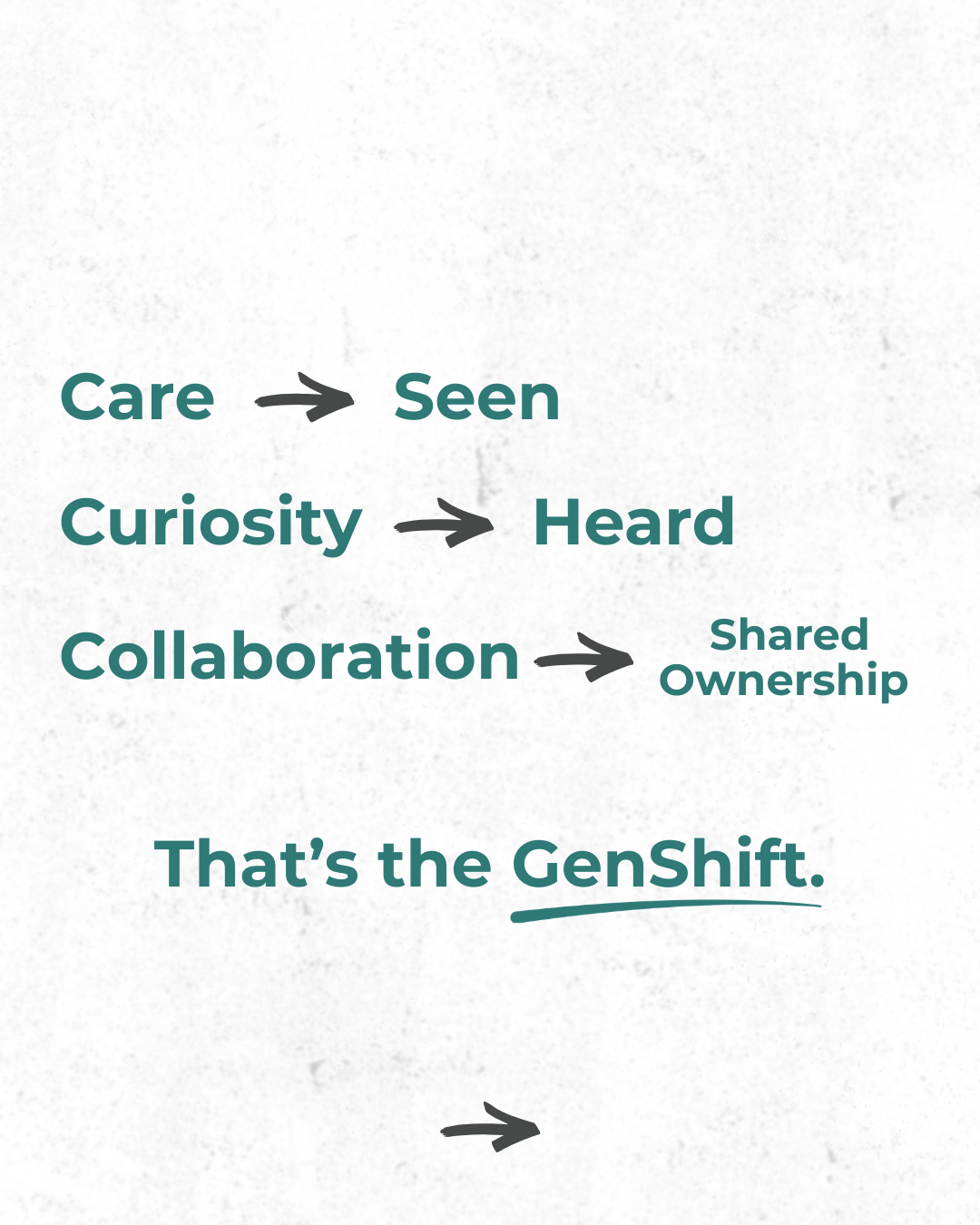
Every single generation is asking in their own language, do you actually see me as a real person? Not just as someone who is performing a role and producing for you in the care audit. The questions go straight to the heart of it. Does my manager care about me as a unique individual? Is my leader actually authentic and transparent?
Are they really who they say they are? Are they just selling me something that isn't real? When people don't feel cared for, everything else seems to get harder. Communication gets harder, feedback gets harder, and trusting other people certainly gets harder. Think about someone you've worked for who made you feel known.
Maybe they remembered a detail about your life. Maybe they asked how you preferred recognition, public, private. It wasn't complicated. It was just human, and it changed your energy, right? That small moment works because it answers a deeper question, do you see me the way I need to be seen? Care is not about generic kindness.
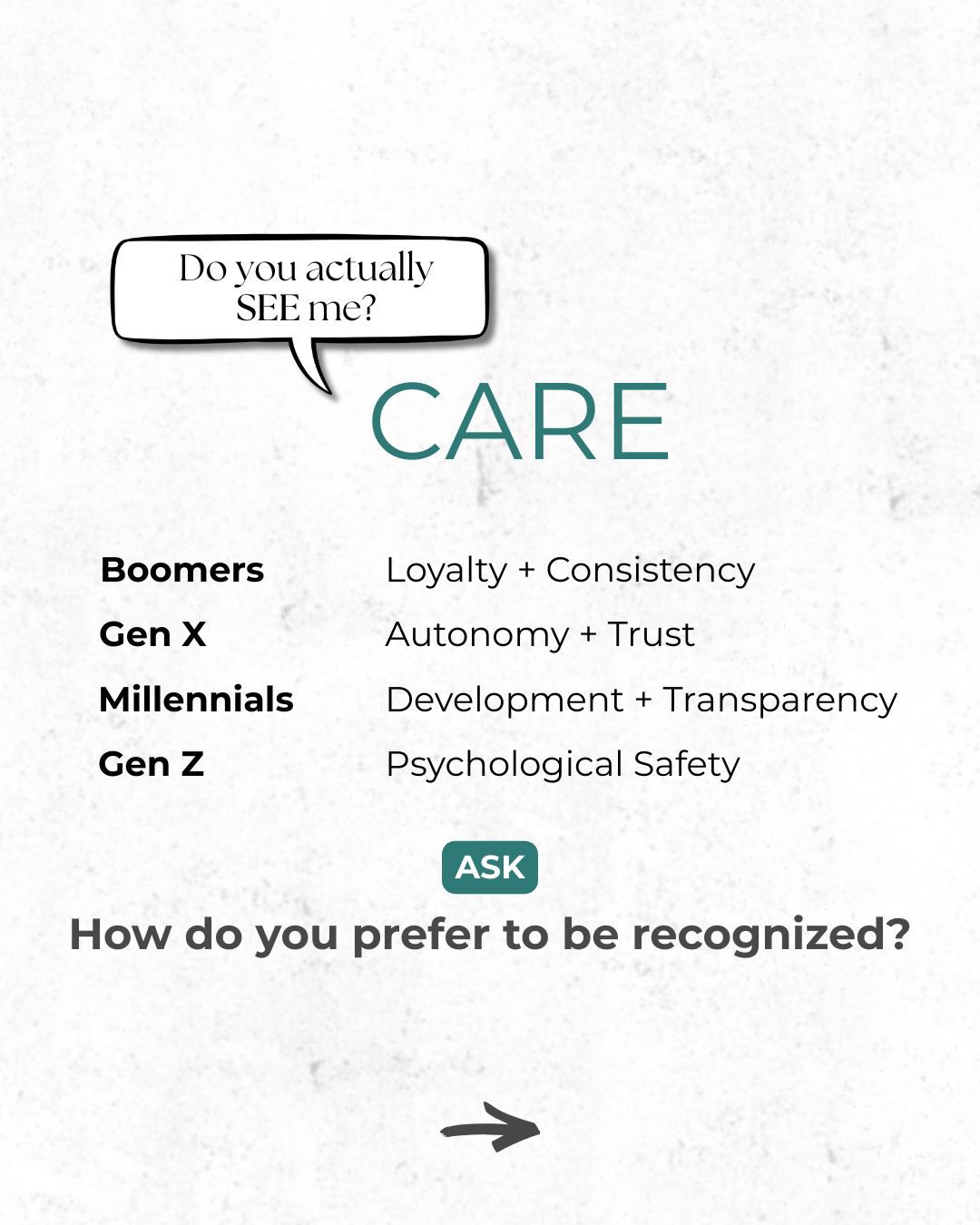
It's actually personalized attention, noticing what matters to that person, and not just relying on what would matter to you. And this is where the generations come in. People from different eras often define care differently. Boomers often feel cared for through loyalty and consistency. Gen Xers are craving space.
They wanna know they're being trusted and they're not being micromanaged. Millennials feel cared for through development and transparency. And Gen Z often feels cared for when mental health and psychological safety are taken seriously. Every generation's talking about care, but what signals it, what actually makes it feel real varies across the generation, and that's the key.
It's the same word, care, but there are different meanings. When leaders understand those meanings, they can actually meet people where they are. So here's a simple start to showing that you care. Next time you lead a meeting, ask one person, how do you prefer to be recognized when you do great work?
You'll be amazed at how much clarity that one question brings and how quickly it can build trust and strengthen any relationship.
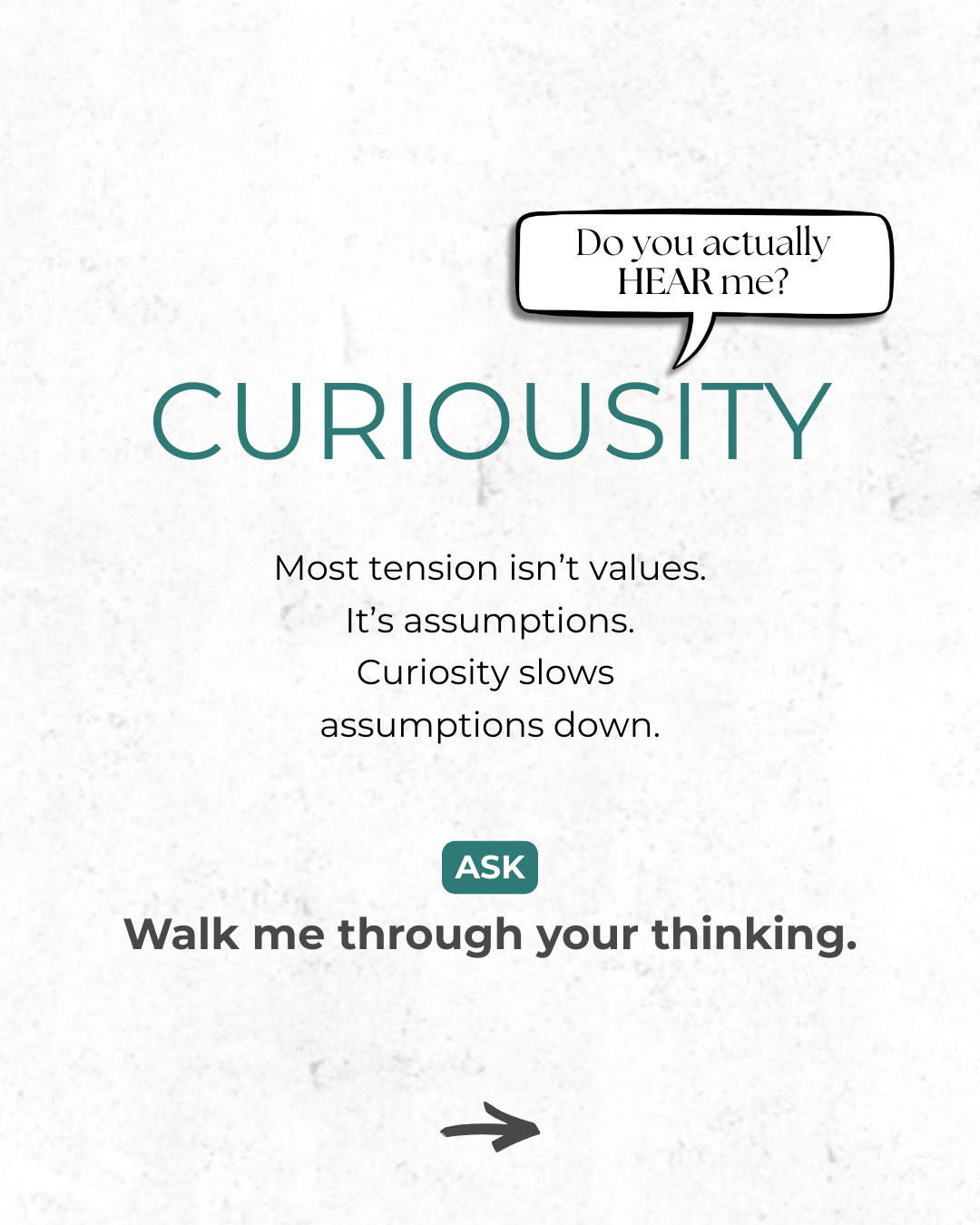
If care is about being seen, curiosity is about being heard. Once someone feels recognized as a person, the next question they're asking is, will you listen to me without jumping ahead of me? If care answers, do you see me? Then curiosity answers do you actually hear me? The curiosity audit asks simple but revealing questions.
Do I feel safe? Sharing my opinions, feelings, and ideas. Are my opinions and ideas actually listened to? Do I feel heard in this space? And here's the truth. Most generational tension isn't about values. It's about assumptions. The story that we fill in without checking. So we often stop being curious with the people we think we already understand.
We fill in the blanks. We assume their intentions. We listen to respond not to understand. And when that happens, people of all ages start to shut down. Curiosity isn't a technique, it's a posture. Calm, open, and willing to learn. It sounds like, Hey, tell me more. What am I missing here? What would make this work better for you?
Or how do you like to receive feedback? Those questions are not complicated. This isn't rocket science, but they interrupt our internal narratives and create space for trust. The next time someone approaches a task differently than you would have pause before correcting them. Instead, try something like, you know, Hey, walk me through your thinking here.
You will learn more in that one question than you would in your 10 assumptions, and you'll strengthen the relationship at the same time.
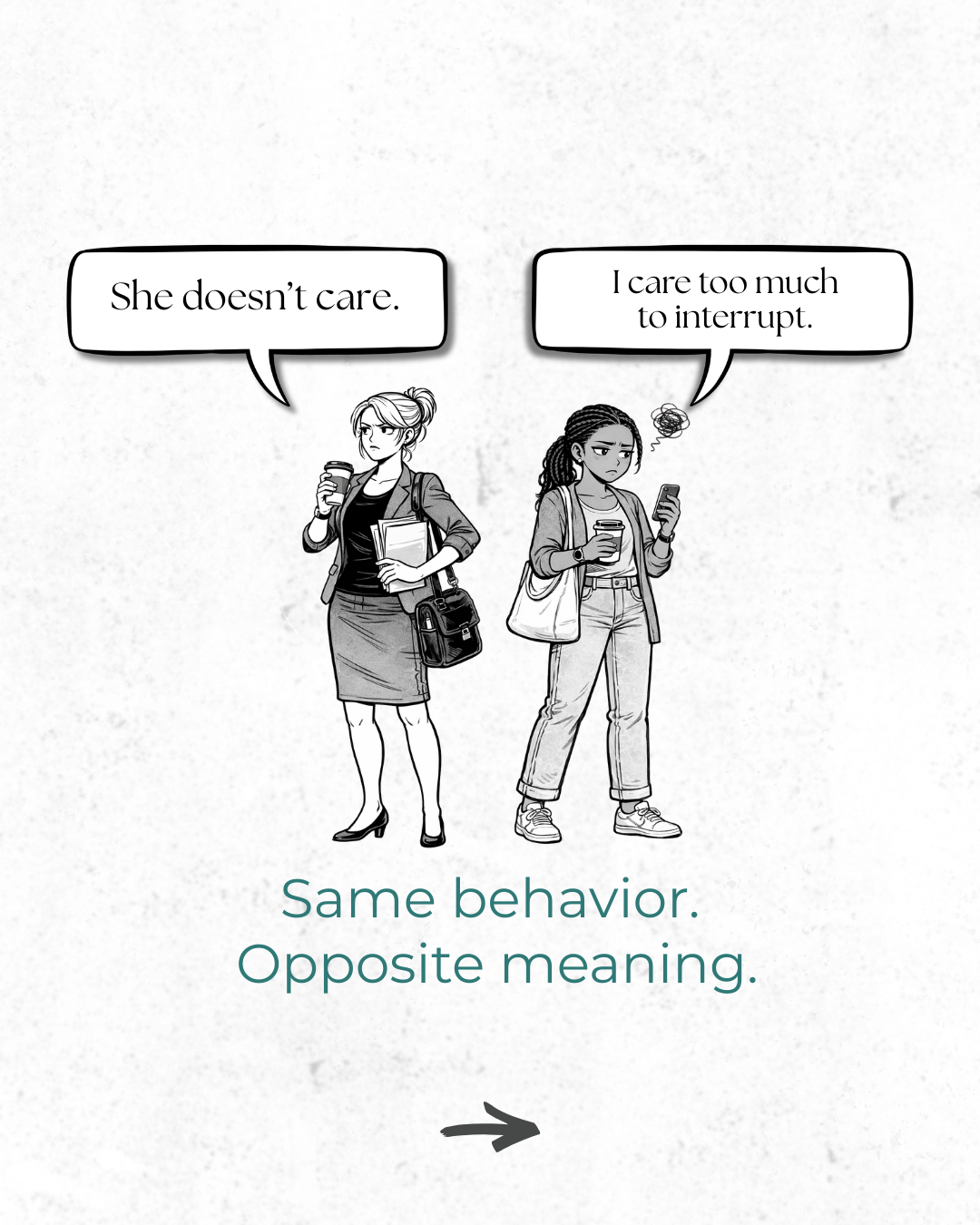
I once worked with a team where a Gen X manager was growing, increasingly frustrated with a millennial analyst. Every week he would say, I don't think she cares. She never talks in meetings. The analyst on the other hand told me, I care too much. I just don't wanna interrupt people. Same behavior.
Opposite meaning the Gen X manager's definition of care was speak up, jump in. Show initiative. The millennial analyst's definition of care was don't dominate the space, make room for others. Neither was wrong. They were playing by different generational rules operating out of different paradigms. The breakthrough came when the manager asked a single curious question.
Can you walk me through how you decide when to speak up in meetings? She shared her reasoning. He shared his expectations.
Within one week, communication improved. Within one month trust improved. Care helped her feel seen. Curiosity helped him hear her clearly. Collaboration helped them build a better rhythm, and nothing about the job changed. Only the connection did.
So if care helps people feel seen and curiosity helps them feel heard, then collaboration answers the final question. Every generation is asking. Will you work with me, not over me or around me?
Care sees people. Curiosity listens to people. Collaboration says, let's build something together. The collaboration audit goes deeper into what real partnership requires. Do we have a shared vision? What are the most important characteristics on any team? How do I adapt to change the best? Those questions matter because collaboration isn't just coordinating task. It's creating an environment where everyone's strengths contribute to something bigger.
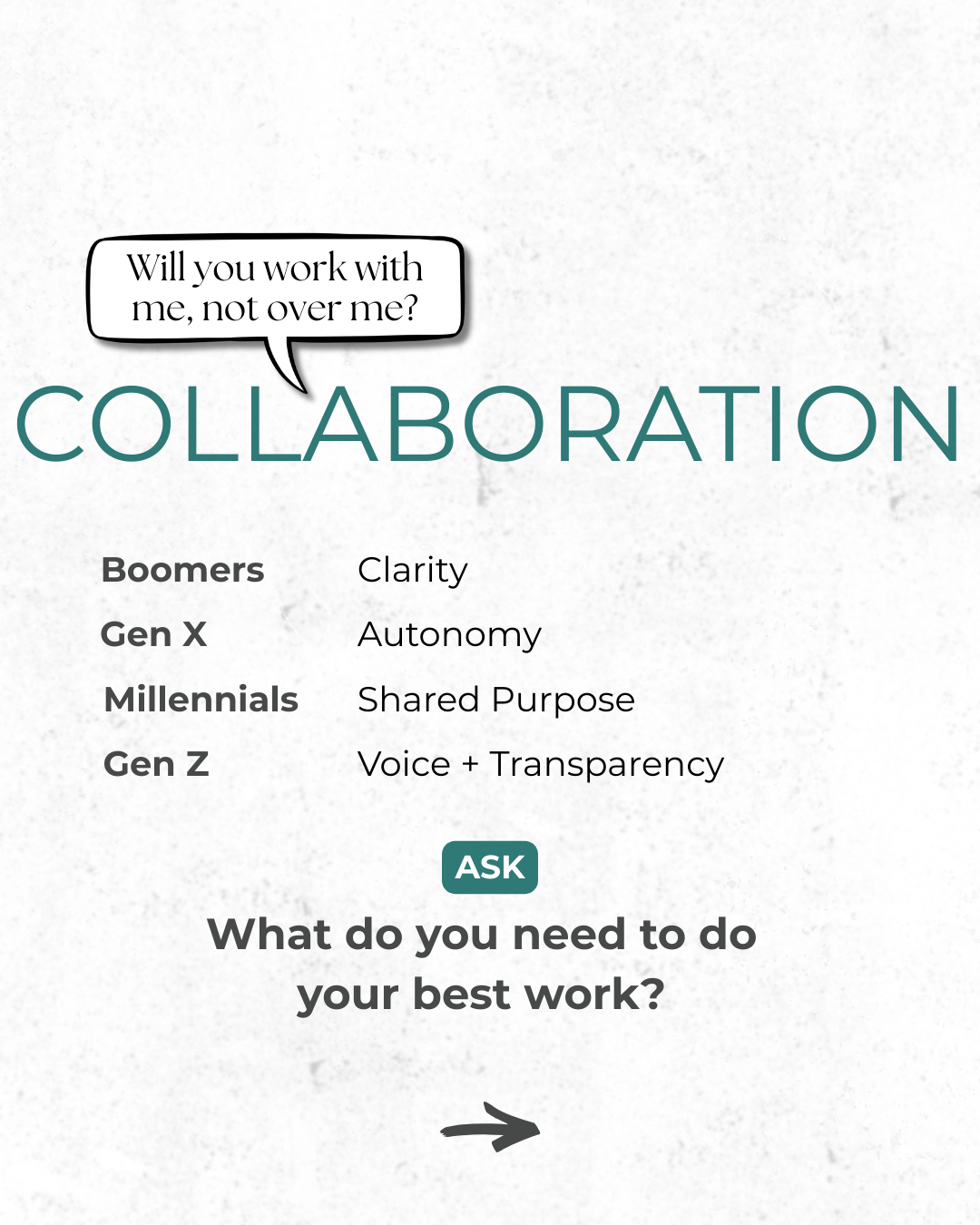
Here's where the generational lens becomes practical. Boomers often feel collaborative when decision making is very clear. Gen X feels collaborative when they have autonomy. Millennials feel collaborative when their shared purpose and Gen Z often feels collaborative when they have voice and transparency.
Each group is saying, Hey, I wanna work with you. But they're naming different conditions that help them do that well. When leaders take those needs seriously and design for them intentionally, teams actually get innovative when those differences are ignored, teams get friction. So before you start a project, try this simple step.
Ask your team, what does each of us need to do our best work on this? Write the answers down. This will give you clarity. It will cut the number of misunderstandings you experience and give every generation what they crave the most. A sense of shared ownership.
One thing I've learned is this, people don't wake up wanting to frustrate each other. They're actually doing the best they can with the stories that they have, but different generations walk into the same workplace with very different stories. That's where the three Cs come in.
They give us a framework to slow down, notice what's happening beneath the surface, and connect in ways that are actually meaningful.
So everybody, here's the real magic. When you combine care, curiosity, and collaboration, you create a culture where people feel seen, heard, valued, aligned, and energized across generations, across roles, across power structures.
Imagine walking into a team meeting where people understand each other's strengths, communication norms, and work styles. It doesn't just make work nicer, it makes it more effective. So here are three questions I want you to take with you today when it comes to care. How can I make one person on my team feel more seen this week?
Thinking about curiosity, where can I replace assumptions with a simple, curious question? Start to change the way you interact. And when working to improve collaboration, what conversation do we need to have so that we can all work better together? These questions sound simple, but they shift teams, cultures, and relationships, especially across generations.
If you found this helpful, share with someone who's leading a multi-generational team, and I'll see you next time on the GenShift podcast.
Transcript