Zillennials — Living in the In-Between

What happens when you grow up with dial-up internet and TikTok? When you remember CDs and MySpace, but also spend hours scrolling through reels and memes?
That’s the world of the Zillennial—the micro-generation born roughly between 1990 and 2000. They remember life before smartphones but came of age with social media. They’re old enough to recall 9/11 and the 2008 recession, yet young enough to shape workplace culture through flexibility, authenticity, and digital fluency.
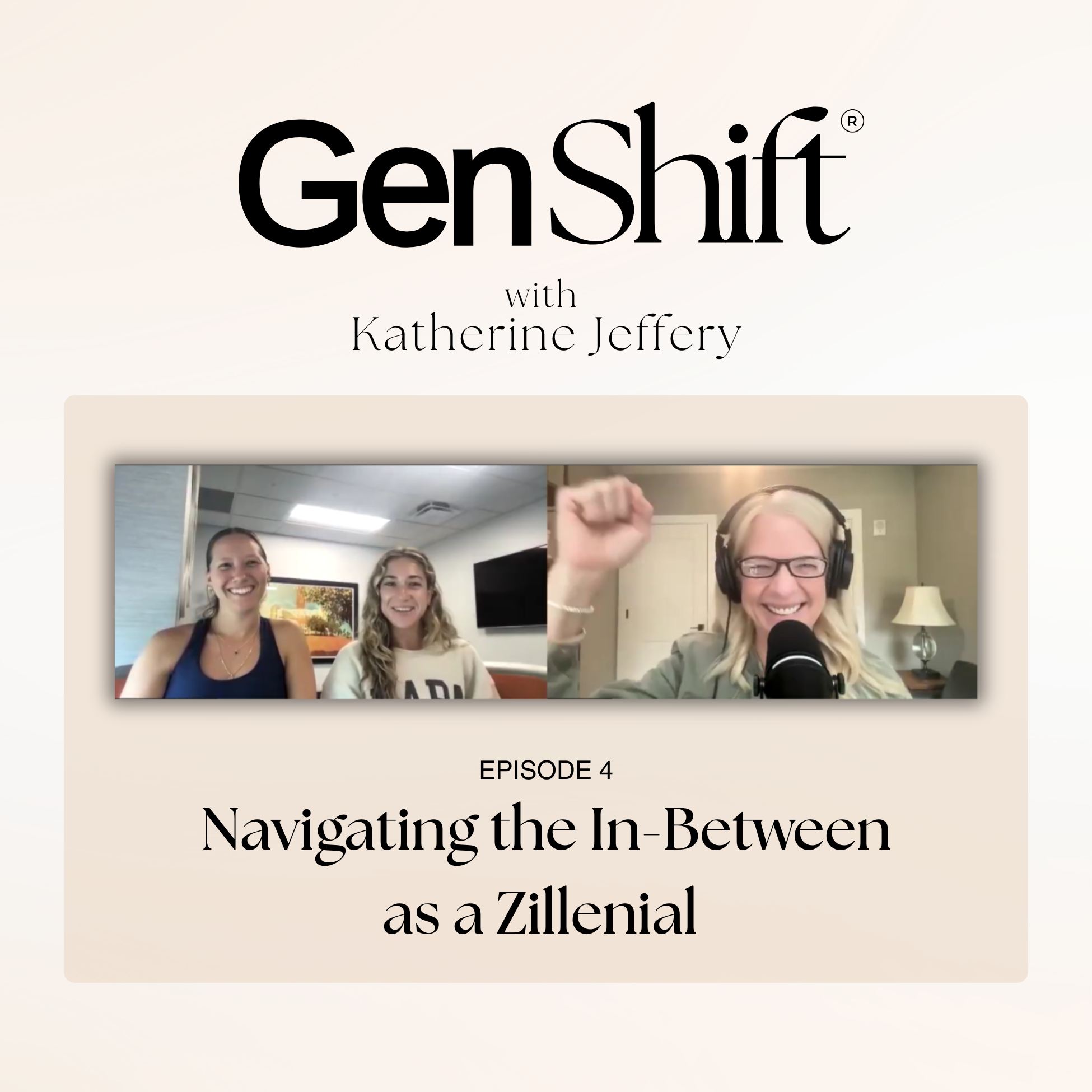
In Episode 4 of the GenShift Podcast, host Katherine Jeffery, Ph.D., sits down with Marissa Gratz and Rachel Bagda, two self-described Zillennials who work together at Orangetheory Fitness. The conversation reveals what it’s really like to live—and work—in the generational middle ground between Millennials and Gen Z.
The Zillennial Experience: Between Two Worlds
Zillennials grew up at the crossroads of change—before and after the internet reshaped communication, work, and identity.
“We had the family computer,” Rachel remembers. “There was one timer for four kids, and if you stayed on too long, you lost your turn.”
They saw technology evolve from AIM chat windows to iPhones, from dial-up tones to Wi-Fi everywhere. Yet both guests say they sometimes miss the boundaries of the pre-smartphone world—when being “unreachable” was normal.
“I long for a time when people can’t reach me,” Rachel admits. “Now, expectations are just different.”
Mental Health and the Social Media Paradox
Both women spoke candidly about how social media shapes self-worth.
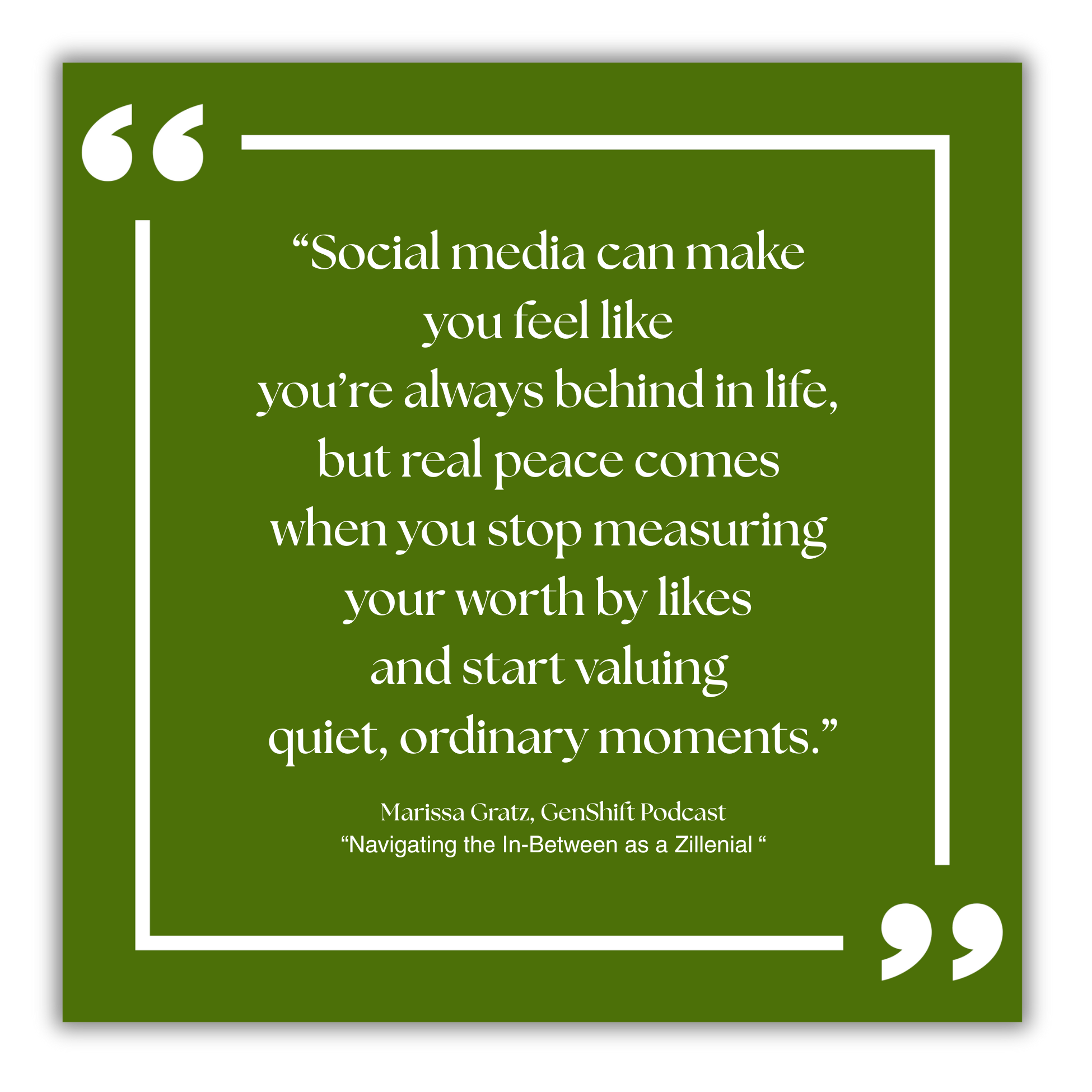
“It can be great,” Marissa said, “but it’s also terrible for your mental health. You see engagement announcements, vacations, and highlight reels—it makes you feel worse about your own life.”
Their reflections echo a generational truth: Zillennials and Gen Z are more open about mental health, but they also feel the constant pressure of comparison and performance online.
Work-Life Boundaries and Balance
When it comes to work, Zillennials are pragmatic idealists. They value meaningful careers but refuse to sacrifice well-being.
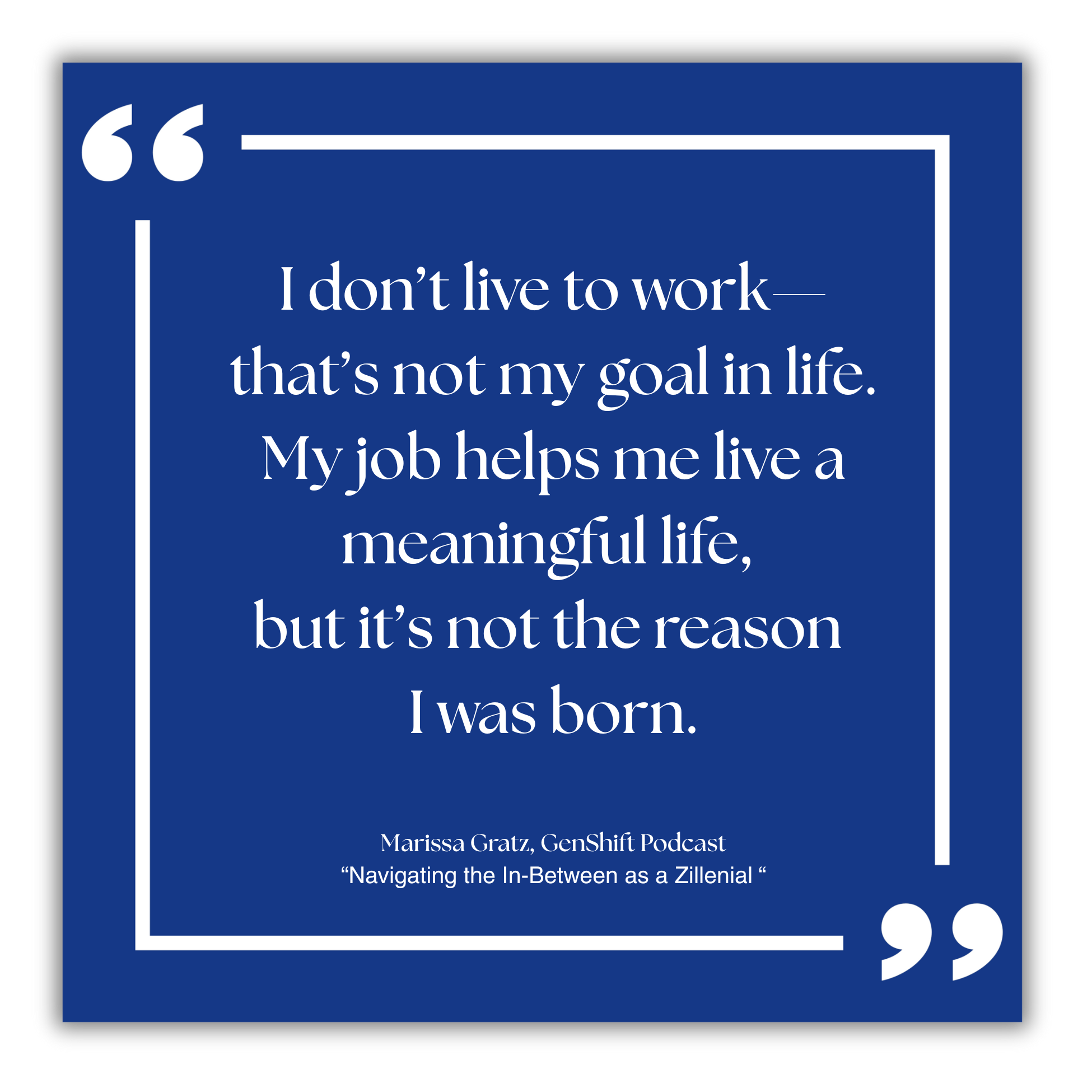
“I don’t live to work,” Marissa said. “I work to live. Taking time off isn’t lazy—it’s sustainable.”
At Orangetheory, both women describe a culture that balances accountability with flexibility—a mix that mirrors their generational values.
Translating Between Generations
Perhaps the most striking part of the conversation is how naturally Zillennials act as translators between generations.
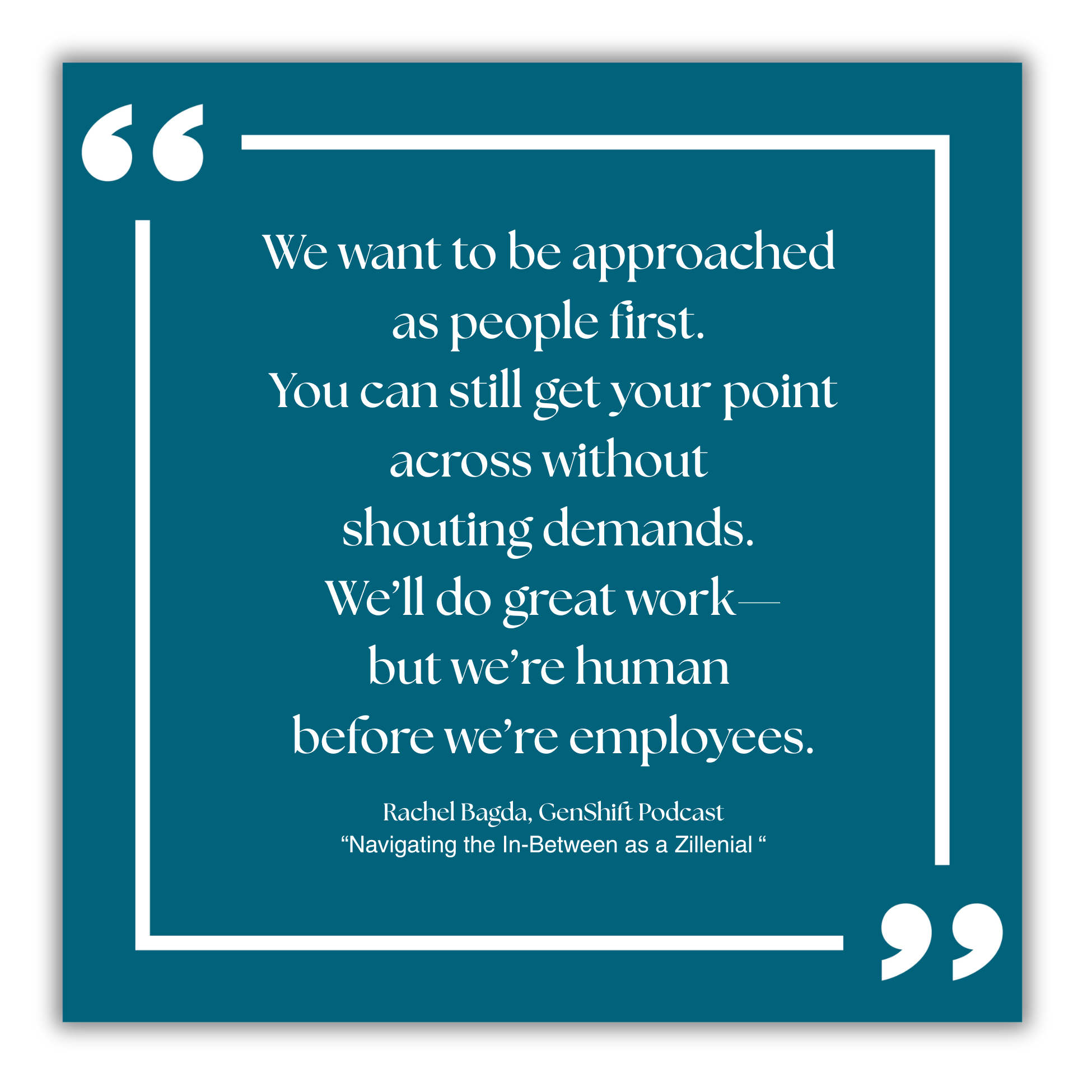
“We’re people first,” Rachel explained. “You can still get your point across, but approach me human to human. Work doesn’t have to come first.”
When Gen Xers or older Millennials come across as “too direct,” they don’t see it as disrespect—they see it as an opportunity to build understanding.
“I want to do it right,” Marissa said. “Sometimes I just need more context.”
Their ability to interpret tone, intent, and culture across age groups is exactly what Katherine calls Generational EQ—emotional intelligence applied across generations.
Why Zillennials Matter
Caught between analog and digital, independence and interconnection, Zillennials embody balance. They bridge Millennial loyalty with Gen Z adaptability. They value relationships as much as results.
As Katherine put it in the episode’s close:
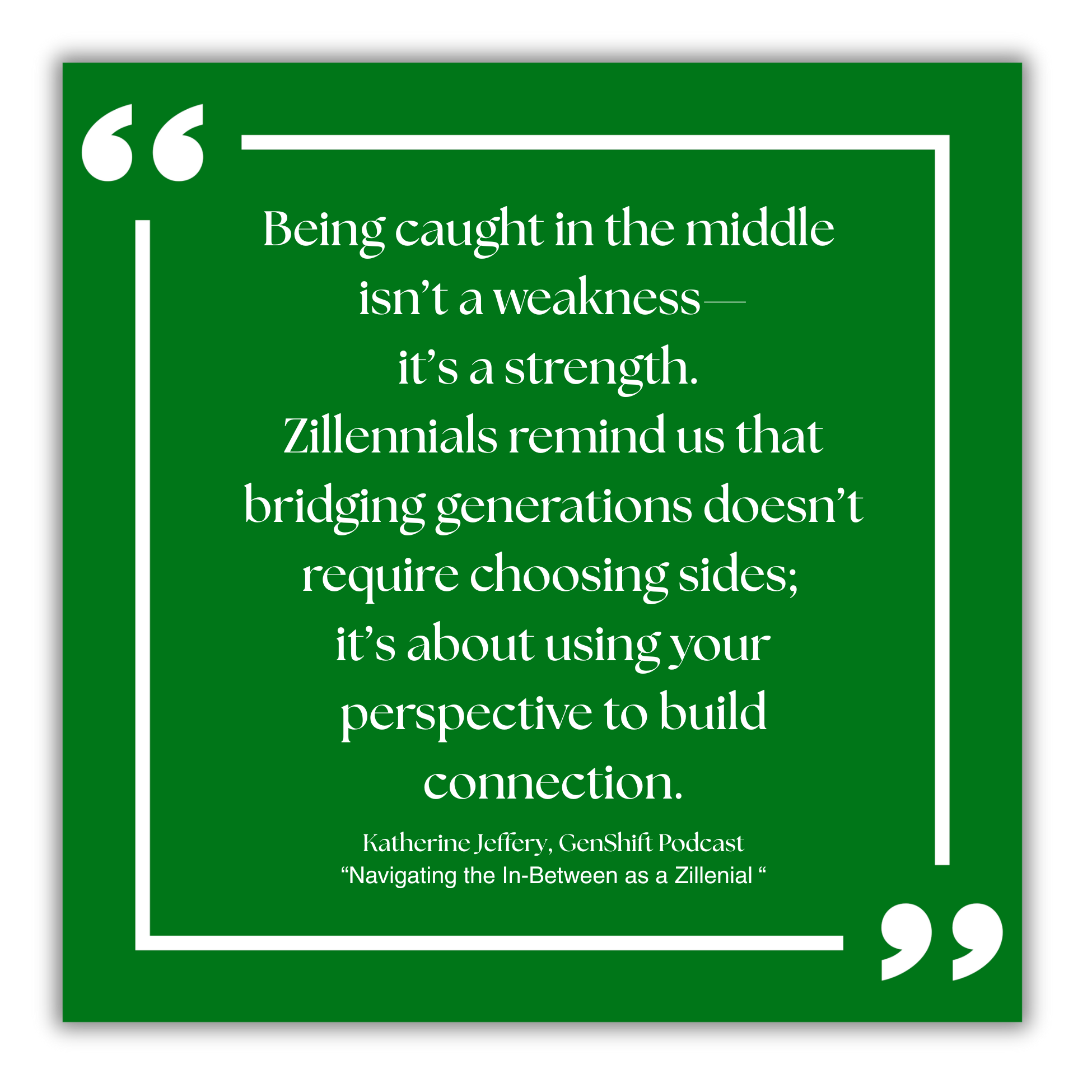
“Being caught in the middle isn’t a weakness—it’s a hidden strength.”
Listen to the Full Episode
Listen to the full conversation with Marissa and Rachel on The GenShift Podcast, available wherever you listen to podcasts.