Boomer and Gen Z at Work: What Cross-Generational Co-Mentoring Really Looks Like
When generational differences show up at work
Generational differences at work are often framed as problems to fix.
Boomers are labeled resistant to change.
Gen Z gets called entitled or impatient.
Too many teams learn to work around these assumptions instead of questioning them.
This GenShift episode tells a different story.
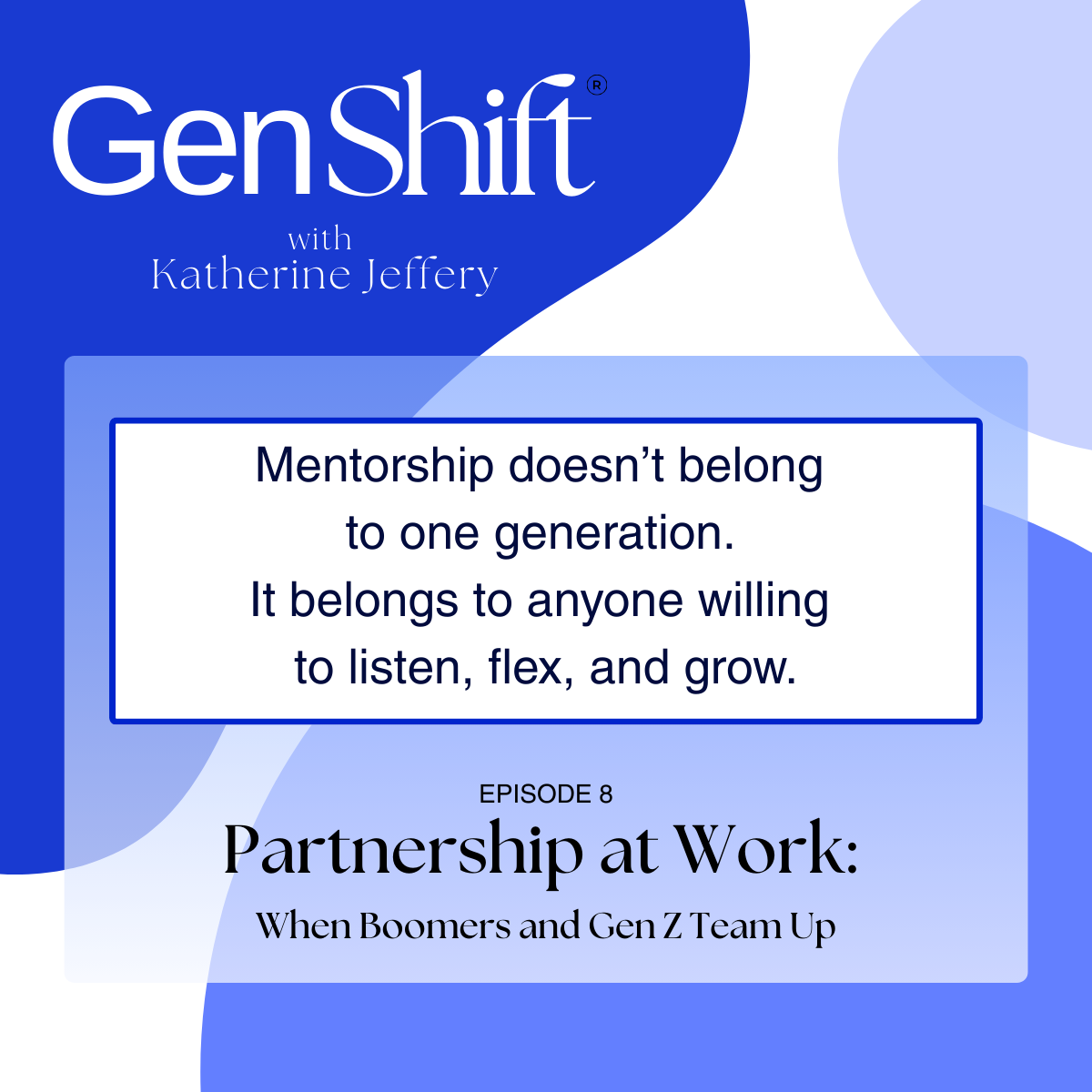
In this conversation, I bring together Carol Wagner, a Baby Boomer leader, and Valerie Hebenstreit, a Gen Z learning and development professional. Their relationship began during COVID, when Valerie joined Carol’s team as an intern. What followed wasn’t tension or frustration. It was trust, growth, and a real working partnership.
Starting with curiosity instead of assumptions
From the start, Carol chose curiosity over assumption. Instead of defaulting to her own leadership style, she asked Valerie how she liked to learn and how she preferred to receive feedback.
Those early questions created space for:
shared expectations
open communication
faster trust
Valerie brought structure, process thinking, and digital fluency. Carol brought strategic perspective, coaching skill, and years of experience. Together, they delivered strong results under real pressure.
What emerged wasn’t traditional mentoring or reverse mentoring.
It was co-mentoring.
Coaching over command and control
Leadership sits at the center of this episode.
Carol reflects on letting go of command-and-control habits that shaped leadership earlier in her career. Valerie shares how coaching, trust, and timely feedback helped her grow quickly and confidently.
For Gen Z, feedback is part of day-to-day learning. It isn’t something to save for annual reviews. At the same time, how feedback is delivered matters.
One small but meaningful practice Carol adopted was asking whether Valerie was open to feedback in that moment. That single question balanced clarity with respect.
It reflects the core GenShift framework:
clarity
flexibility
relationship
Challenging stereotypes on both sides
This conversation directly challenges common generational myths.
Carol pushes back on the idea that Gen Z doesn’t want to work hard. Valerie worked intensely, took initiative, and delivered high-quality work. What looked different from Boomer norms wasn’t effort—it was approach.
Gen Z often emphasizes:
working smarter, not longer
improving process, not just output
using technology to reduce friction
Valerie also reflects on how working closely with Carol reshaped her view of Baby Boomers. Instead of rigidity, she experienced openness. Instead of hierarchy, she experienced partnership. Instead of resistance to change, she saw a willingness to learn.
Over time, both came to the same realization:
stereotypes lose their power when curiosity takes their place.
Why this GenShift conversation matters
This episode is a reminder that generational tension isn’t inevitable.
When leaders ask instead of assume, coach instead of control, and invite feedback instead of avoiding it, workplaces change.
Carol and Valerie’s story isn’t idealized. It required effort, adjustment, and honest conversation. But it shows what’s possible when people across generations stay curious and committed to learning from each other.
That’s GenShift in action.